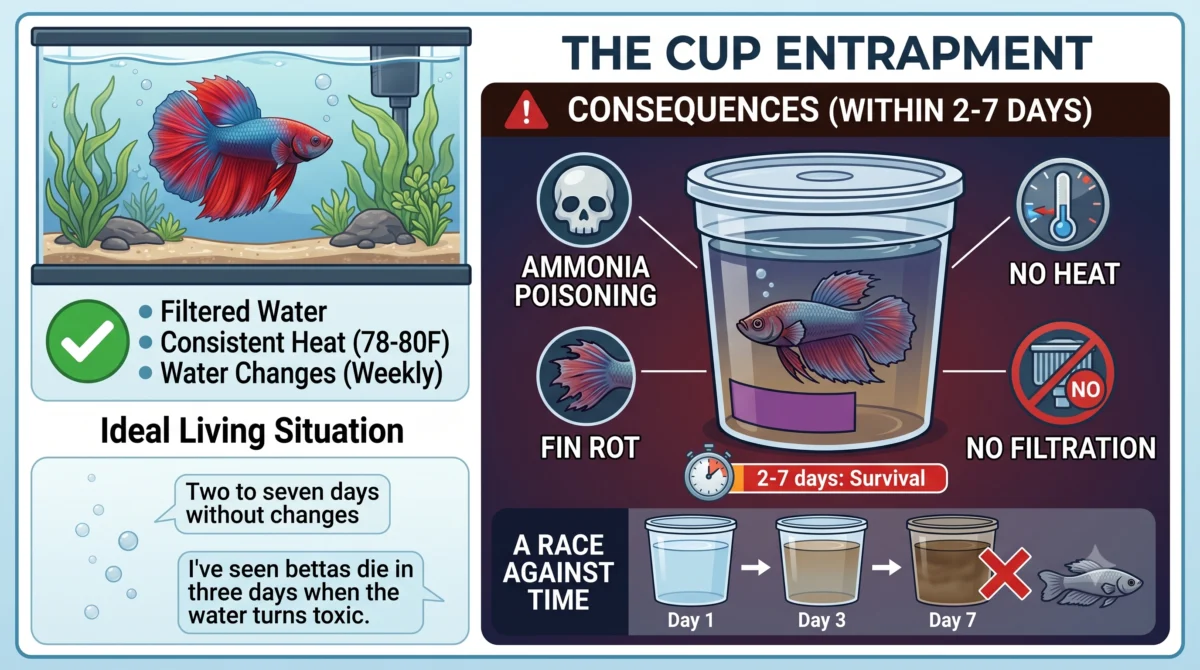
A betta fish survives only two to seven days in a typical pet-store cup without water changes, heat, or filtration. That’s a temporary holding container, not a home. Permanent cup confinement leads to ammonia poisoning, fin rot, and death within a week. I’ve seen bettas die in three days when the water turns toxic. This isn’t a living situation; it’s a race against time.
How Long Can a Betta Fish Live in a Cup?
Two days to a week is the honest window. A betta trapped in a small cup, say eight ounces or less, deteriorates fast. Ammonia builds up from waste within hours, burning gills and damaging organs.
Without heat, the water stays at room temperature, slowing metabolism but also suppressing immunity. Some bettas cling on for a full week if the cup is kept warm and water is swapped daily. But that’s survival, not living.
Why Are Cups Harmful for Betta Fish?
Cups lack everything a betta needs. No filtration means ammonia spikes. No heater means temperature swings that stress the fish.
No space means the betta cannot stretch its fins or exercise. Water evaporates, concentrating toxins. Oxygen exchange is poor in a narrow container.
I’ve tested water from a cup left untouched for three days, ammonia hit 8 ppm, lethal for any fish. The cup’s tiny volume gives zero buffer against pollution.
What Factors Determine Survival Time in a Cup?
Water temperature tops the list. Bettas need 78, 82°F; cup water at 65°F slows digestion and triggers lethargy. Frequency of water changes matters hugely, daily full swaps keep ammonia low.
Cup size plays a role too: an eight‑ounce cup kills faster than a sixteen‑ounce deli container. Feeding also counts, overfeeding rots uneaten food, while no food starves the fish. And the betta’s starting health dictates how long it tolerates stress.
What Happens to Water Quality in a Cup?
Water quality crashes within hours. A betta’s waste converts to ammonia, which reaches toxic levels in a cup by hour twelve. Without biological filtration, ammonia climbs rapidly.
The pH shifts from fish waste, and dissolved oxygen drops as the water sits still. Slime coats the surface if the cup has a lid, trapping gases. In my experience, a cup of water left with a betta overnight looks clear but smells foul by morning, the ammonia burn starts long before you smell it.
How Does Lack of Filtration Affect a Betta?
No filter means no beneficial bacteria colony to break down ammonia. A cup has no surface area for bacteria to colonize anyway. So every bit of waste stays in the water, continuously poisoning the fish.
Ammonia burns gill tissue, making it hard to breathe. Nitrites follow, binding to blood cells and suffocating the fish from the inside. Without filtration, the only cleaning method is manual water replacement.
That works short‑term, but the cycle repeats every few hours.
Can a Betta Survive in a Cup Overnight?
Overnight, yes, barely. A healthy betta in a clean cup with stable room temperature above 70°F can make it through one night. But I do not recommend it.
Ammonia already starts accumulating within hours. By morning, the fish shows stress signs: clamped fins, rapid breathing, or glass surfing. If you must keep a betta in a cup for a few hours during transport, limit it to under eight hours.
Anything longer risks permanent gill damage.
What Are the Signs of Stress in a Cup-Housed Betta?
The first sign is clamped fins, the betta holds its dorsal and tail fins close to the body. Next comes lethargy; the fish rests on the bottom instead of patrolling. Gasping at the surface indicates low oxygen or high ammonia.
Loss of appetite follows within a day. Color fades from vibrant blue to dull gray. Skin may show red streaks from ammonia burns.
If you see any of these, the cup environment is failing. Act fast.
What Should You Do If You Have a Betta in a Cup?
Transfer the betta to a heated, filtered tank of at least five gallons as soon as possible. If you cannot set up a proper tank immediately, place the cup in a warm room away from drafts. Change 100% of the water every 12 hours using dechlorinated water at the same temperature.
Feed only a single pellet every 48 hours to reduce waste. But this is a stopgap, the cup remains a death trap. Every hour in the cup shortens the betta’s lifespan.
How Does Cup Life Compare to a Proper Tank?
A cup offers zero benefits over a tank. In a five‑gallon tank with a heater and filter, a betta lives three to five years. In a cup, the same fish lasts days.
The tank provides stable water chemistry, swimming space, and enrichment. The cup provides confinement and toxin buildup. Research from the University of Florida IFAS Extension confirms that bettas need at least two gallons of water for basic welfare.
A cup holds a fraction of that.
Common Myths About Betta Fish and Small Bowls
Many believe bettas live in puddles in the wild, false. They inhabit rice paddies and floodplains with large volumes of shallow, warm water. Another myth: bettas don’t need filters because they breathe air.
Labyrinth organs help them gulp air, but gills still process water. Ammonia still kills. Some think a bowl is just like a cup.
A bowl is slightly better for oxygen exchange but still lacks filtration and heat. Neither supports long‑term life.
FAQ
How often should I change water in a betta cup?
Every 12 to 24 hours with dechlorinated water at the same temperature. More frequent changes reduce ammonia, but the cup is still unsafe long‑term.
Can a betta fish live in a cup permanently?
No. Permanent cup confinement causes organ failure and death within weeks. Bettas need a heated, filtered tank of at least five gallons.
What’s the smallest tank a betta can live in?
Five gallons is the minimum for a single betta. Smaller tanks cannot maintain stable water quality or provide space for swimming.
Do bettas get stressed in cups?
Yes, severely. Stress suppresses the immune system, leading to diseases like fin rot and velvet. Stress also shortens lifespan dramatically.
How long can a betta survive without food in a cup?
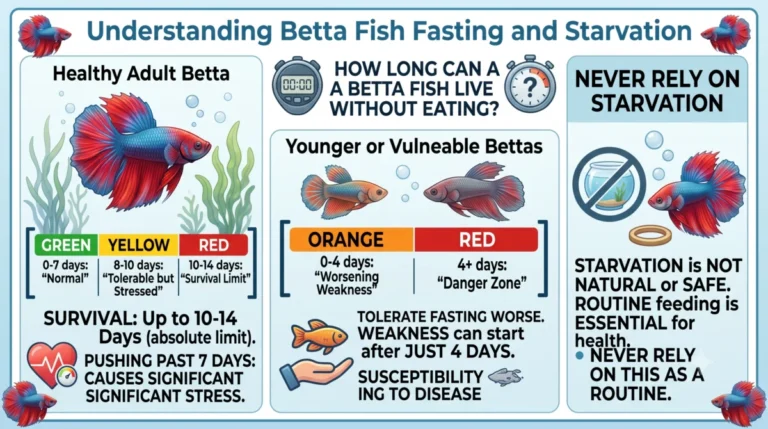
Adult bettas survive up to two weeks without food, but cup conditions speed starvation. Without water changes, ammonia kills before hunger.
Is it okay to keep a betta in a cup for a few days?
Only as a absolute emergency measure, and only with daily full water changes and temperature control. Even then, it risks permanent health damage.
What temperature should the water be in a betta cup?
Aim for 78, 82°F. Room temperature is too cold. Use a small heater or float the cup in warm water, but monitor closely to avoid overheating.
Why do pet stores keep bettas in cups?
Pet stores use cups for temporary display and easy customer transport. It is economical but not ethical. Stores expect cups to be replaced by proper tanks within days.