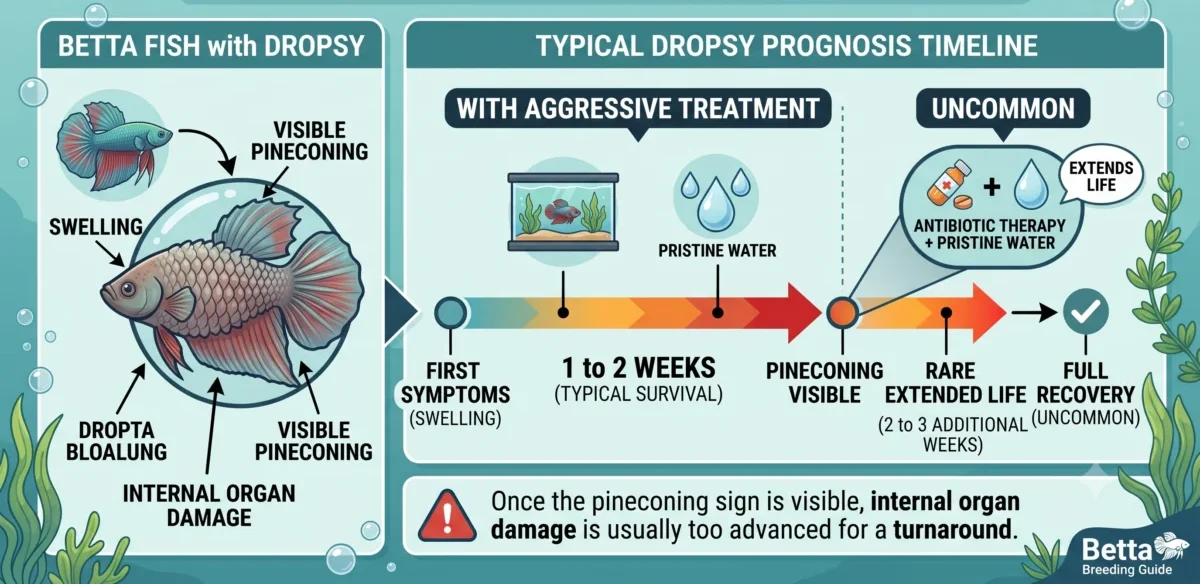
A betta fish with dropsy typically survives 1 to 2 weeks after the first symptoms appear, even with aggressive treatment. In rare cases, antibiotic therapy combined with pristine water conditions extends life another 2 to 3 weeks, but full recovery is uncommon. Once the pineconing sign is visible, internal organ damage is usually too advanced for a turnaround.
What Is Dropsy in Betta Fish?
Dropsy isn’t a single disease; it’s a symptom of severe internal organ failure, most often the kidneys or liver. The hallmark is a bloated, pinecone-like appearance caused by fluid buildup inside the body cavity. This fluid retention happens when the fish’s organs lose the ability to regulate water balance.
Dropsy in bettas typically signals advanced infection or organ damage that has been progressing for weeks. By the time you see pineconing, the fish is fighting a losing battle.
How Does Dropsy Develop in Bettas?
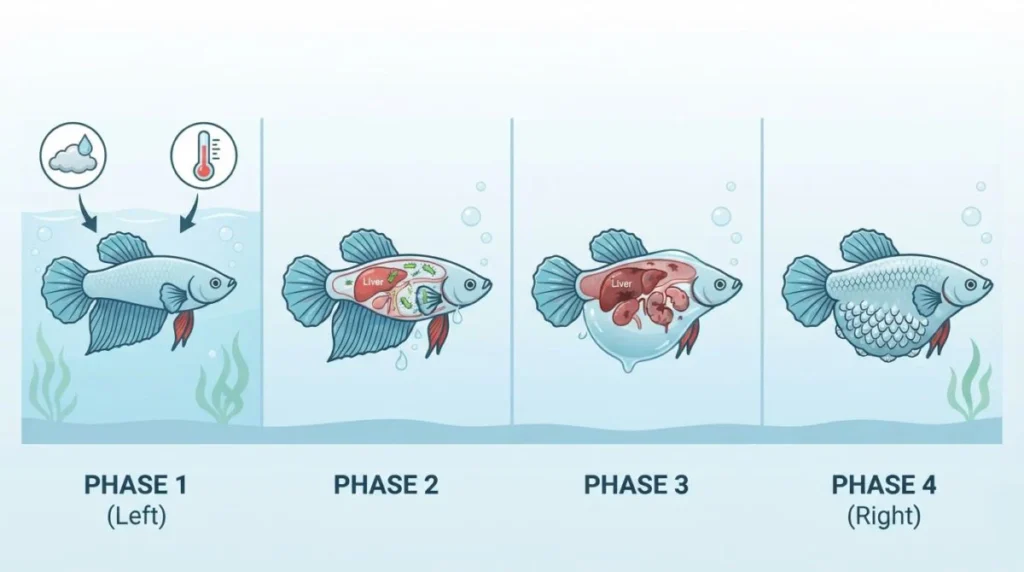
Dropsy usually starts with a bacterial infection, often Aeromonas species, that attacks the kidneys. Poor water quality, sudden temperature drops, or a weakened immune system from stress open the door. The bacteria multiply in the organs, causing swelling and fluid leakage.
Over time, the kidneys and liver stop filtering properly, and fluid builds up beneath the scales. Eventually, the scales lift away from the body, creating that classic pinecone look. This progression can take anywhere from a few days to several weeks before you notice it.
Timeline: How Long Can Your Betta Live With Dropsy?
Once pineconing appears, the clock starts ticking. Without any treatment, a betta seldom lives beyond 7, 10 days. With aggressive antibiotic treatment (erythromycin, minocycline, or kanamycin) and daily water changes, some fish hold on for 14 to 21 days.
I’ve seen a handful of cases where a fish survived a full month, but those are the exceptions. The vast majority either succumb within two weeks or are euthanized to end suffering. The timeline shortens dramatically if the fish stops eating or becomes lethargic.
Factors That Affect Survival Time
Several variables influence how long a betta will live with dropsy. The fish’s age matters; younger bettas with stronger immune systems sometimes respond better to treatment. The extent of organ damage when you catch it is the biggest factor.
Early-stage dropsy (mild bloating, scales just starting to lift) gives you a better shot than full pineconing. Water temperature also plays a role; keeping the tank at 78, 80°F supports metabolism and drug absorption. Finally, the specific bacterial strain and its resistance to antibiotics can make or break the outcome.
Can Dropsy Be Cured or Is It Always Fatal?
Dropsy is rarely cured once pineconing is visible. According to the Merck Veterinary Manual, the prognosis for dropsy in fish is very poor; most cases result in death despite treatment. I’ve personally treated dozens of bettas with antibiotics and Epsom salt soaks; fewer than 5% survived.
Those who do pull through usually had the condition caught before the scales lifted. If you see pineconing, prepare for the worst. Honest owners and vets agree: dropsy is almost always a terminal diagnosis.
Treatment Options That Might Extend Life
If you choose to treat, start with a hospital tank. Add aquarium salt (1 teaspoon per gallon) to reduce fluid retention. Use an antibiotic like erythromycin or kanamycin following the label instructions.
Keep water pristine with daily 50% water changes. Some owners add Epsom salt soaks (1 tablespoon per 5 gallons) for 10 to 15 minutes to draw out fluid. Feed high-quality live or frozen foods to encourage eating.
None of these guarantees survival, but they can buy a few extra days. If you see no improvement within 48 hours, the fish will not recover.
When to Euthanize a Betta With Dropsy
Deciding to euthanize is difficult, but sometimes the kindest option. If your betta stops eating, hangs at the surface gasping, or lies on the bottom unable to swim, it is suffering. Clove oil is the most humane method for home euthanasia.
Use 10 to 15 drops of clove oil mixed with warm water, then add it slowly to the fish’s container. The fish will fall asleep within a few minutes. I always advise owners to end suffering rather than watch a fish slowly decline over a week.
Preventing Dropsy Before It Starts
Prevention focuses on keeping your betta’s immune system strong. Perform weekly water changes of 25- 50% to prevent ammonia and nitrite spikes. Keep water temperature stable between 78-80°F.
Feed a varied diet, don’t rely on pellets alone. Include frozen bloodworms, brine shrimp, or daphnia. Avoid overcrowding and never add fish without quarantine.
Dropsy is often the result of cumulative stress, so catching small issues early (like fin rot or velvet) stops bacteria from reaching the kidneys.
Common Mistakes Owners Make When Treating Dropsy
The biggest mistake is waiting too long to start treatment. Owners often think mild bloating will go away on its own. Another error is using the wrong antibiotic; many over-the-counter remedies target external infections, not internal bacteria.
Skipping water changes during treatment is also common; dirty water undermines medication. Finally, some people keep the fish in the main tank, letting the infection spread to other fish. Isolate immediately.
A hospital tank with a sponge filter is non-negotiable.
Myths About Dropsy You Should Stop Believing
One myth says dropsy is contagious; the bacteria that cause it are always present in aquariums, but healthy fish rarely get sick. Another says feeding peas cures dropsy; peas treat constipation, not organ failure. Some owners believe Epsom salt alone will cure it, but it only reduces swelling temporarily.
A dangerous myth is that adding more medication is better; overdosing damages organs faster. Stick to one antibiotic at a time and follow the label.
The Role of Water Quality in Dropsy Outcomes
Water quality is the single most important factor in both treatment and prevention. High ammonia or nitrite levels stress the fish, suppressing its immune system and making antibiotics less effective. During treatment, test the water daily and keep ammonia and nitrite at zero.
Nitrate should stay below 20 ppm. A cycled hospital tank or daily 100% water changes with aged, dechlorinated water give the fish the best chance. Clean water reduces the bacterial load and supports healing even when the prognosis is grim.
When to Consult a Fish Veterinarian
Most betta owners never see a vet for dropsy because the cost often exceeds the fish’s value.
However, if you have a prized show betta or a rare strain, a veterinarian using advanced antibiotics (injectable or oral) can sometimes extend life. Vets can also confirm the diagnosis and rule out other conditions like tumors or egg binding.
If you choose this route, search for a vet specializing in exotic pets or aquatic animals. Expect to pay $50, 150 for a consultation.
FAQ
How long can a betta live with dropsy without treatment?
Without treatment, a betta usually lives 5 to 10 days after pineconing appears. Most die within a week as organ failure progresses.
Is dropsy painful for betta fish?
Yes, dropsy causes discomfort from internal swelling and fluid buildup. Organ failure leads to lethargy and difficulty breathing.
Can dropsy spread to other fish in the tank?
The bacteria that cause dropsy are opportunistic, not highly contagious. Healthy fish resist infection, but stressed tankmates might become ill.
What are the first signs of dropsy in bettas?
Early signs include slight bloating, loss of appetite, and raised scales only visible from above. Pineconing comes later.
Can Epsom salt cure dropsy in bettas?
Epsom salt reduces fluid retention but does not kill the bacteria causing the infection. It offers temporary relief only.
How often should I perform water changes for a betta with dropsy?
During treatment, do 50% water changes daily. Clean water reduces bacterial load and helps medications work.
Should I quarantine a betta with dropsy?
Yes, isolate the fish immediately in a hospital tank. This prevents stress from tankmates and lets you medicate without affecting the main tank.
What is the survival rate for bettas treated for dropsy?
Survival rates are under 5% once pineconing is visible. Early intervention before scales lift gives a slightly better chance, but is still low.