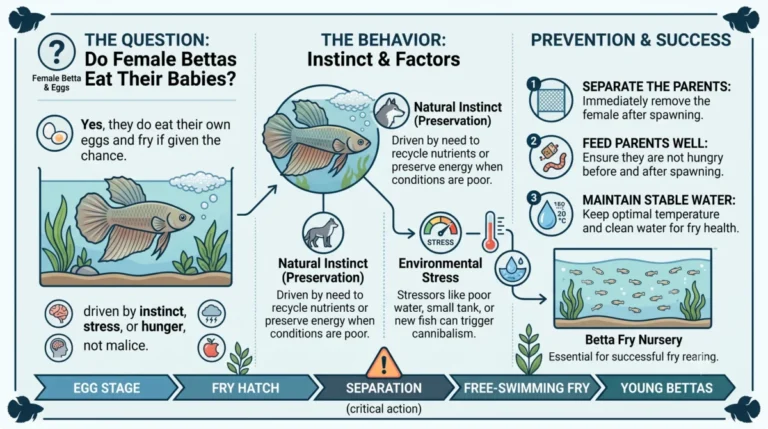
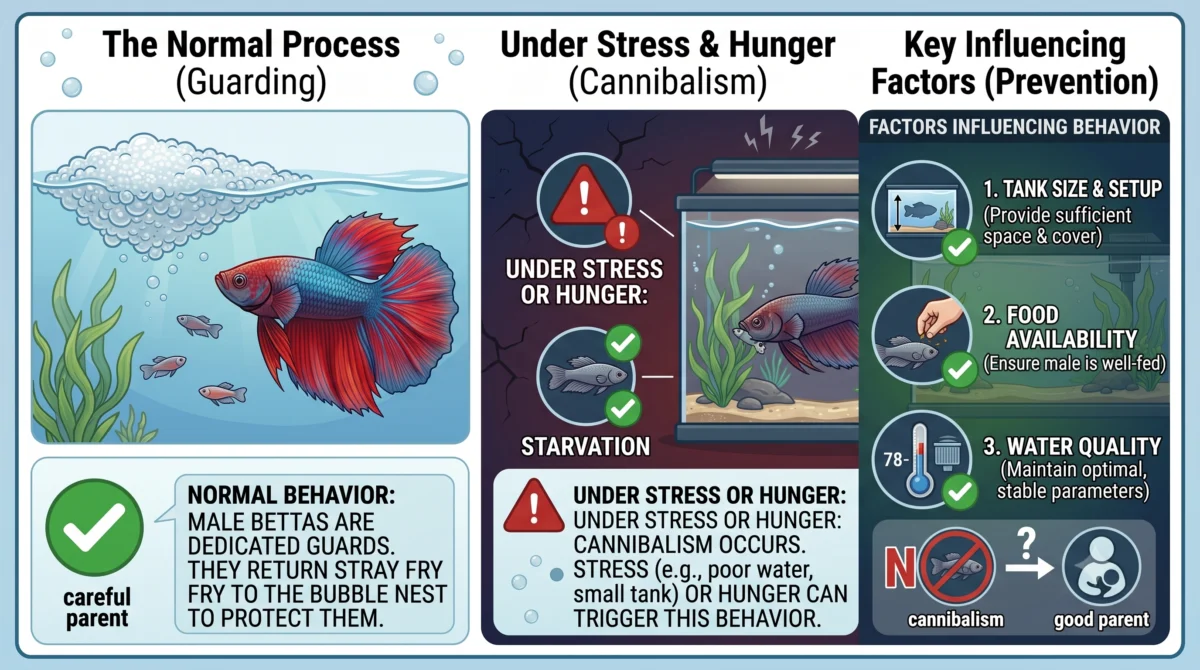
Yes, male betta fish do eat their own babies, but not always, and not without reason. In the wild, male bettas guard the nest and return stray fry to the bubble nest, yet under stress, hunger, or inexperience, they will cannibalize their offspring. Aquarium conditions, tank size, food availability, and water quality all influence whether a male betta eats his fry.
Why Do Male Bettas Eat Their Fry?
Male bettas are programmed to protect their eggs and fry, but survival instincts can override paternal care.
When a male feels threatened by poor water conditions, frequent disturbance, or overcrowding, he may eat the fry to conserve energy for future breeding attempts.
Hunger plays a major role; if the male is underfed during the spawning and guarding period, he will view the tiny fry as a food source.
Young or first-time fathers often lack the experience to distinguish between fry and food. They might accidentally inhale fry while attempting to return them to the nest.
Even experienced males will cannibalize if they detect disease or weakness in the fry, instinctively removing unhealthy offspring to protect the rest of the brood.
When Does Cannibalism Typically Occur?
Cannibalism usually happens within the first 48 hours after hatching. During this window, the fry are tiny, wriggling, and attached to the nest via mucus threads. The male constantly patrols, picks up fallen fry, and spits them back into the bubble nest.
One wrong bite or a moment of confusion leads to consumption. Once the fry become free-swimming (around day three to five), the risk rises again because the male no longer sees them as nest-bound dependents. At that stage, the fry dart around looking for food, and the male’s instinct shifts from guarding to foraging.
Experienced breeders often remove the male right after the fry become free-swimming to prevent losses. If the male shows persistent aggression toward fry even before that stage, immediate separation is necessary.
How to Prevent a Male Betta from Eating His Fry
Start with conditioning. Feed the male high-protein foods like live brine shrimp and bloodworms for two weeks before spawning. A full stomach reduces his urge to hunt.
Keep the breeding tank dimly lit and undisturbed, no tapping on glass, no sudden movements. Add plenty of floating plants or a spawning mop so fry have hiding spots. Lower the water level to six inches to concentrate the nest and make fry retrieval easier.
Most importantly, introduce the female only when the male has built a solid bubble nest and shows no aggression. After spawning, remove the female immediately; she will eat eggs if left. Monitor the male’s behavior every few hours.
If he starts eating fry, remove him at once and try hand-raising the fry yourself.
The Role of the Bubble Nest in Protecting Fry
The bubble nest isn’t just a spawning platform, it physically separates eggs and newly hatched fry from the tank bottom where predators and debris lurk. Male bettas construct these nests from saliva-coated bubbles, usually under a leaf or floating plant. Eggs float up into the bubbles, and the male constantly nudges them back in place.
The nest structure keeps fry clustered together, making it easier for the male to guard them. A collapsed or scattered nest signals stress or poor water quality, increasing cannibalism risk. Breeders often place a piece of floating foam or a large leaf at the water surface to encourage nest building.
If the nest is weak, the male may abandon it and eat the fry.
Ideal Tank Conditions for Successful Fry Rearing
Stable water parameters are non-negotiable. Keep temperature between 78, 82°F, pH around 7.0, and ammonia at zero. Use a sponge filter with gentle flow, strong currents destroy bubble nests and stress the male.
Cover the tank with a lid because bettas jump. Provide hiding places like Java moss, almond leaves, or plastic mesh that allow fry to escape but let the male swim freely. Feed the male sparingly during guarding: one or two small live foods per day, removed if uneaten.
Dead food fouls the water and triggers the male to clean the nest by eating fry. Change 10% of the water daily using a turkey baster to avoid sucking up fry. Consistency calms the male and reduces cannibalistic behaviour.
Signs That a Male Betta Might Eat His Babies
Watch for specific behaviours. If the male repeatedly ignores fallen fry instead of returning them to the nest, he is likely sizing them up as food. Aggressive flaring at the fry, chasing them away from the nest, or eating them immediately after picking them up are clear red flags.
A male that stops blowing bubbles or lets the nest disintegrate has lost parental interest. Physical signs like a distended belly after fry disappear point to cannibalism. Inexperienced males often seem confused, they swim in circles, mouth open, as if unsure what to do with a fry.
Any of these signs mean it’s time to separate the male. Waiting too long can wipe out the entire brood.
How to Separate the Male from His Fry
The safest method is gentle netting. Use a soft mesh net and move slowly to avoid crushing fry. You can also coax the male into a cup or breeding box placed inside the tank.
If the fry are already free-swimming, siphon the male out with a large turkey baster. Never grab or chase him aggressively, stress spikes ammonia and endangers fry. After removal, transfer the male to a separate, cycled tank with matching water parameters.
If you need to keep him in the same room, block his line of sight to the fry tank to reduce frustration. Some breeders leave the male until the fry are two weeks old, but that is risky. For high-value spawns, remove the male as soon as the fry are free-swimming and feed the fry infusoria or microworms.
Common Myths About Male Betta Cannibalism
Myth one: male bettas always eat their babies. False, many males raise fry successfully if conditions are right. Myth two: cannibalism means the male is aggressive or defective.
In reality, it is a natural survival mechanism. Myth three: removing the male guarantees fry survival. Without the male, fry lose protection from fungus and debris, and you must maintain water quality and feeding yourself.
Myth four: adding a female helps guard the fry. Females eat eggs and fry without hesitation, they should never be present after spawning. Myth five: betta fry can survive on egg yolk alone.
They need microscopic food within hours of becoming free-swimming. Understanding these myths helps breeders make informed decisions rather than blaming the male.
Do Male Bettas Eat Their Eggs Too?
Yes, male bettas frequently eat their own eggs, especially during the first spawning attempt. Unfertilized eggs turn white and fungus-prone; the male eats those to prevent rot from spreading to healthy eggs. He may also eat viable eggs if he is startled, underfed, or if the nest collapses.
The female also poses a danger, she will eat eggs if not removed promptly. To reduce egg cannibalism, provide a calm environment, feed the male well before spawning, and ensure the nest is sturdy. If the male eats a large portion of eggs, remove him, treat the remaining eggs with methylene blue to prevent fungus, and consider using a different male for future spawns.
FAQ
Do male betta fish always eat their babies?
No, many males successfully raise fry without cannibalism. Conditions like food availability, water quality, and the male’s experience matter more than instinct.
At what age do male bettas eat their fry?
Cannibalism is most common in the first three days after hatching and again when fry become free-swimming around day four to five.
Can you leave the male betta with the fry?
Yes, but only until the fry become free-swimming. After that, removal is strongly recommended to prevent losses.
What should I feed a male betta to stop him from eating fry?
Feed him live brine shrimp or bloodworms one to two times daily during the guarding period. A full stomach reduces cannibalistic behaviour.
How do I know if my male betta ate his fry?
Check his belly for swelling and look for missing fry. If the nest disappears overnight and fry count drops suddenly, cannibalism likely occurred.
Is it normal for a male betta to eat eggs?
Yes, especially unfertilised or fungus-covered eggs. He also eats healthy eggs when stressed, inexperienced, or underfed.
Should I remove the female after spawning?
Absolutely. Remove the female immediately after eggs are laid. She will eat both eggs and fry if left in the tank.
Can I breed the same male again after he ate his fry?
Yes, but give him a two-week break with heavy feeding. Many males improve with experience and a better environment.
Related Posts