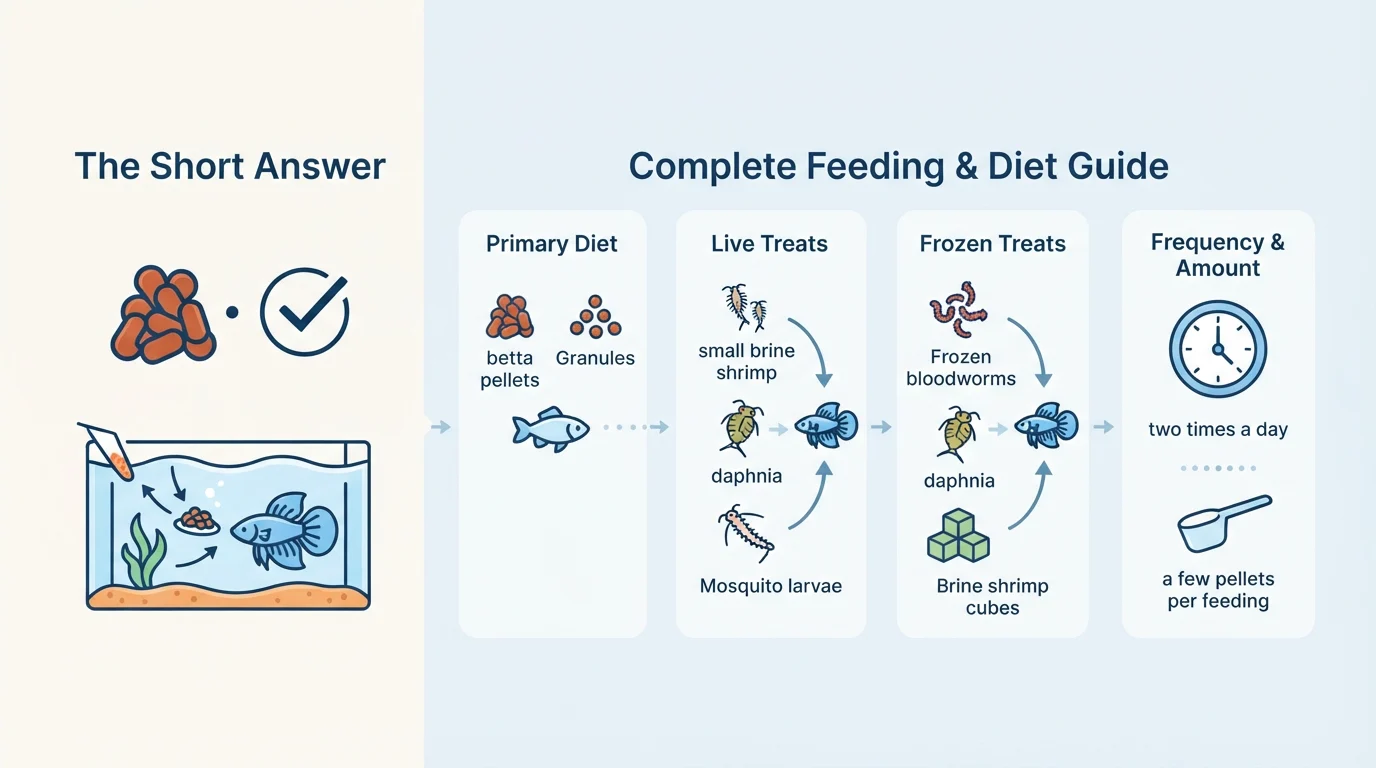
Betta fish are meat-eaters at heart. A quality pellet, plus the odd live or frozen treat, covers almost everything a betta needs.
The Short Answer First
New owners usually just want one clear answer before anything else. So here it is: bettas need a protein-rich pellet as their everyday food. Not flakes, not veggies, not table scraps.
Fish meal or shrimp meal should sit near the top of the ingredient list. That single detail tells you more about quality than almost anything else on the label.
Curiosity about the basics never really goes away, even for owners who’ve kept fish for years. Simple questions, like whether bettas actively hunt for food, still come up often in forums and pet stores.
The rest of this guide covers wild diet, safe treats, foods to skip, and feeding amounts.
Why Bettas Are Built to Hunt
A betta’s mouth and gut didn’t evolve by accident. Both are shaped by millions of years spent chasing small, moving prey in shallow water.
Life in a Rice Paddy
Wild bettas live in rice paddies, ditches, and slow streams across Southeast Asia. Nothing about that setting hands them food for free.
Every meal there gets earned through a quick strike. This explains why owners ask what bettas eat in the wild, expecting plants, but finding an animal-based answer.
Wild betta feeding habits center on mosquito larvae, tiny worms, and other small creatures near the surface. None of it grows on a stem or floats as algae.
Captivity and the Modern Pet Betta
This background explains a lot about captive behavior too. A betta kept in captivity today still carries these wild instincts, even after generations of breeding.
Feeding a captive betta well really just means recreating this same wild menu using modern tools. Pellets and frozen treats stand in for the mosquito larvae a wild fish would otherwise chase down itself.
Some new owners frame this question around ownership instead of biology. Asking what a pet betta eats gets the same answer as asking about a wild one. Captivity never rewires basic needs.
A Note on Naming
Naming adds one more layer of confusion worth clearing up. Betta fighting fish, a name tied to their competitive spirit, eat exactly like any other betta.
Common Mix-Ups Worth Clarifying
Even simple wording mix-ups don’t change the science. A search for what bettas eat naturaly, typo included, still leads back to that same protein-first answer.
One odd but common mix-up deserves a direct answer too. Bettas are strictly freshwater fish. Any question about what bettas eat in the ocean starts from a false premise.
Choosing the Right Staple Food
Staple food is the daily bread of a betta’s diet. It covers about 90 percent of meals between treats.
Pellets Versus Flakes
Pellets tend to win this comparison for most owners, mainly due to portion control. Asking pellets or flakes as a direct comparison usually favors pellets, since they hold shape and don’t scatter.
Flakes still have their place, though. Fish flakes for bettas work fine occasionally, as long as the brand lists real protein, not filler.
Marketing Claims Versus Real Ingredients
Ingredient lists matter more than flashy packaging ever will. A bag labeled special betta food should still get checked closely. “Special” is just marketing until ingredients prove it.
The same scrutiny applies to broader, less species-specific choices too. Regular fish food often leans toward lower protein, built for omnivores rather than a true carnivore.
Tropical Food Formats
General tropical fish food shares this same protein gap as regular fish food. Format alone tells only part of the story here.
Asking about tropical flakes specifically runs into this same issue too, regardless of marketing.
Answering the Widest Version of This Question
Sometimes the question gets asked from the widest angle possible. Wondering what kind of food works best, or what kind of fish food, both need protein first.
Live and Frozen Treats Bettas Love
Treats aren’t just a nice extra. They mimic the exact hunting experience a wild betta would get every single day. Everything in this section answers what to feed besides fish food for real variety.
Bloodworms Top Almost Every List
Ask any long-time keeper for a favorite treat, and bloodworms as treats usually come up first. Both live and frozen versions trigger an instant response.
This enthusiasm isn’t random either. Bloodworms closely match the size and movement of the small prey a betta would chase in the wild.
Brine Shrimp and Sea Monkeys
Right behind bloodworms sits brine shrimp treats, offered live, frozen, or freeze-dried. Many owners rotate between the two to keep feeding interesting.
Sea monkeys deserve a special mention here too. Sea monkeys as betta food points to the same animal as brine shrimp, sold under a novelty name.
Daphnia and Krill for Color and Variety
Daphnia brings something extra to the table beyond taste. Daphnia for digestion works well. Its fibrous shell can gently help move things along for a betta prone to bloating.
Krill plays a different role entirely. Krill for coloration comes up often. Its natural pigments can noticeably deepen a betta’s red and orange tones.
The Broader World of Live Food
Stepping back, the wider question of live food benefits deserves its own answer. Live prey taps into instinct that frozen food can’t fully replicate.
For a shopping list, what kind of live food works best: bloodworms first, then brine shrimp, then daphnia.
Shrimp as Food, in Every Size
Shrimp show up constantly in betta diet questions. They range from tiny treats to full tank mates.
Ghost Shrimp and General Shrimp
Ghost shrimp as prey make a popular choice, especially smaller ones offered as an occasional snack. Adult ghost shrimp sometimes survive fine in a shared tank instead.
More broadly, whether bettas eat shrimp in general comes down mostly to size. Anything small enough to fit in a betta’s mouth is fair game.
Amano Shrimp
Amano shrimp size helps them avoid becoming dinner, especially once fully mature. Younger amano shrimp face far more risk in a shared tank.
Cherry Shrimp and Red Cherry Variety
Cherry shrimp follow a similar pattern, just at a smaller scale overall. Asking about cherry shrimp risk, or the red cherry variety, leads to one answer: small size means danger.
Baby Shrimp and Shrimp Eggs
Reproduction adds its own wrinkle to this topic. Baby shrimp survival rates tend to be low in any tank shared with a hungry betta.
Eggs carry their own small risk too. Shrimp egg predation happens sometimes. A betta may nip at visible egg clusters out of curiosity or hunger.
Dried Shrimp and Shrimp Pellets
Not every shrimp option needs to be alive. Dried shrimp treats work well as a shelf-stable option, once soaked briefly first.
Processed further still, shrimp pellets as food offer a protein boost with no live component. They’re an easy occasional addition.
Insects and Other Small Prey
Insects make up the backbone of a wild betta’s actual diet. It makes sense they show up constantly in feeding questions.
Bugs and Insects in General
The broad question of bugs as betta food usually points back to the same wild instinct discussed earlier. Small, moving prey draws attention no matter the exact species.
Framed slightly differently, asking about insects more specifically returns this same answer. A betta’s hunting instinct doesn’t much care what label we put on its prey.
Flies and Fruit Flies
Any small fly landing on the water’s surface draws quick attention. House flies for bettas get snapped up fast, reflecting genuine wild hunting instinct.
Fruit flies deserve their own quick mention too. Asking about the single fruit fly scenario gets the same answer as flies in general: an easy snack.
Gnats Near the Water
Gnats round out this small flying category nicely. Gnats near water trigger this same quick hunting response and offer natural protein.
Ants and Grasshoppers
Ants occasionally end up in a tank by accident. Ants as food works fine in small amounts, though few owners seek them out.
Grasshoppers come up less often, mostly due to size. Grasshopper size concerns matter, since most available ones are too large for a betta.
Mealworms in Small Pieces
Mealworms need some care too, thanks to their tougher shell. Offering mealworms as treats in small pieces avoids digestive strain.
Earthworms as an Occasional Treat
Garden sourcing needs some care here too. Earthworms as treats work well occasionally, though pesticide-free sourcing matters, since garden soil sometimes carries harmful residue.
Adult Mosquitoes and Larvae
Few foods match a betta’s instinct like this one. Both adult mosquito prey and their larval stage feel about as natural as food gets.
The larval stage deserves its own spotlight. Mosquito larvae specifically may be the single most natural food, matching what a wild betta hunts daily.
Is This Instinct Universal
This preference runs deep across the species. Asking whether all bettas share this instinct gets a fairly confident yes, built into their biology.
What About Snails?
Snails occupy a strange middle ground in betta care. Sometimes they’re food. Sometimes they’re a calm, permanent tank mate instead.
Snails in General
The broad question of snails as prey almost always comes down to size and shell strength. Small, soft-shelled snails face real risk, while larger ones usually stay safe.
A more specific twist on this same idea asks about snail choice by type. Mystery snails, nerite snails, and ramshorn snails top most recommendation lists for exactly this reason.
Apple Snails and Aquatic Snails
Apple snails as adults grow large enough to shrug off most betta attention. Younger apple snails remain vulnerable until their shell hardens.
Stepping back to a wider category, aquatic snails overall follow this same basic rule. Shell strength and size decide the outcome far more than species ever does.
Bladder Snails and Freshwater Varieties
Bladder snails tend to be tiny even as full adults. Bladder snail risk stays higher than average because of this small size.
Freshwater snails as a broader group face a gentler version of this risk. Freshwater snail safety improves noticeably once a snail reaches a decent adult size.
Nerite Snails
Among the most popular choices, nerite snails as tank mates offer strong shells and steady algae control.
Pond and Ramshorn Snails
Pond snails arrive in many tanks by accident, often hitching a ride on new plants. Pond snail population booms sometimes happen, and a resident betta can help keep numbers in check.
Ramshorn snails follow this same accidental-arrival pattern too. Ramshorn snail control through natural betta predation works reasonably well, especially with younger individuals.
Snail Eggs and Snails Sharing a Tank
Reproduction brings its own small twist here. Snail egg predation happens sometimes, since visible egg clusters can draw a curious nip from a nearby betta.
More broadly, snails living in the tank long term usually work out fine once fully grown.
Planaria as an Occasional Snack
A tiny, unexpected creature shows up here too. Planaria in the tank, harmless flatworms in an overfed setup, get eaten opportunistically with no real risk.
Plants, Algae, and Greenery
Plants raise a completely different kind of question. Most owners want to know if their green additions are actually at risk, not whether they’re nutritious.
Live Plants in General
The short version first: bettas rarely eat live plants on purpose. Live plants as food sits low on the list, since a betta’s gut isn’t built for greens.
Occasional nibbling does happen, though rarely with any real appetite behind it. This holds true whether the question covers plants in general or one specific leafy species.
Java Moss
Specific plant types all share this same story. Java moss interest from a betta stays minimal, limited mostly to curious pecking rather than genuine feeding.
Duckweed and Elodea
Duckweed and elodea follow this exact pattern too. Duckweed as food and elodea as a snack both describe harmless curiosity, not real dietary need.
Bamboo Stalks
Bamboo shows up constantly in betta vase setups, raising this question in several shapes. Bamboo stalks as food draw almost no real interest.
Bamboo Plants and Roots
The same goes for its parts. Bamboo plants overall, along with bamboo root systems, share this identical lack of feeding interest.
Moss Balls and Marimo
Moss balls serve a completely different purpose in a tank. Moss ball interaction usually means a betta resting on top of one, not attempting to eat it.
Marimo balls, technically a type of algae, follow this same resting-spot pattern. Marimo ball safety stays high, since bettas show almost no interest in eating them either.
Peace Lily and Its Roots
Peace lilies come up often in vase-style betta setups specifically. Peace lily safety as a plant choice is fine, though the arrangement itself carries its own separate concerns.
Roots dangling into the water raise their own question too. Peace lily roots don’t attract feeding interest, though decaying roots can affect water quality over time regardless.
Plant Roots More Broadly
Stepping back from peace lilies, plant roots in general share this same non-food status across most aquarium species.
Algae and Algae Wafers
Algae itself rarely draws real feeding interest either. Algae as food ranks low on a betta’s natural preference list, unlike genuine algae-eating species such as plecos.
Algae wafers deserve a separate note here. Algae wafers use suits other tank mates far more than the betta itself.
Vegetables and Other Plant-Based Foods
A handful of everyday vegetables come up often enough to deserve their own quick answers.
Vegetables in General
The broad question of vegetables as food returns a fairly firm no. A betta’s gut is built for protein, not fiber-heavy plant matter of any kind.
Cucumber and Lettuce
Specific vegetables share this same verdict. Cucumber pieces as treats and lettuce leaves as food both suit omnivores, not carnivores.
Peas as an Occasional Treat
Peas follow this same rule too. Peas as treats suit fish with a more balanced digestive system than a betta’s.
Seaweed as a Special Case
Seaweed sits in a different spot, appearing sometimes as a minor ingredient in commercial food. On its own, seaweed nutrition value offers little real worth.
Foods That Can Hurt More Than Help
Not every food question is about what’s beneficial. Some foods simply don’t belong in a betta’s diet at all, for reasons worth understanding clearly.
Bread in General
Bread expands once it hits water, and that’s exactly the problem. Bread as food offers poor nutrition while raising real risk of bloating or blockage.
Bread Crumbs and Breadcrumbs
Broken down further, the risk barely changes at all. Bread crumbs specifically, along with plain breadcrumbs as food, both carry this same expansion problem.
Rice and Starchy Fillers
Rice shares this same expansion risk almost exactly. Rice as betta food should stay off the menu entirely, regardless of how it’s cooked or served.
Human Food, Broadly Speaking
Most meals from a human kitchen simply don’t translate well here. Human food overall rarely matches what a betta’s gut can safely process.
Seasoning makes this risk even worse. Salt, oil, and spices common in human cooking turn a poor food choice into a truly harmful one.
Meat Beyond Betta-Safe Proteins
Not all meat is created equal for a betta’s needs. Meat as a general category, beyond fish-safe proteins covered earlier, needs careful sourcing to avoid seasoning.
Rocks, Foam, and Other Non-Foods
Curiosity sometimes leads a betta toward things that were never food to begin with. Rocks in the tank occasionally get mouthed out of pure curiosity, never as an actual meal.
Foam tells a similar story. Foam on the surface, often just protein buildup from feeding, draws occasional investigation but never real feeding interest.
Slugs and Parasites
Land slugs deserve a clear warning here. Slugs as food should never happen. Land varieties can carry parasites and toxins genuinely harmful to a fish.
Parasites themselves raise a different concern entirely. Parasites in the tank signal an active health problem needing treatment, not natural pest control.
Feeder Fish and Their Risks
Feeder fish come with baggage beyond their size. Feeder fish risk stays high mainly due to disease. These fish are often raised cheaply in crowded conditions.
When Bettas Eat Other Fish
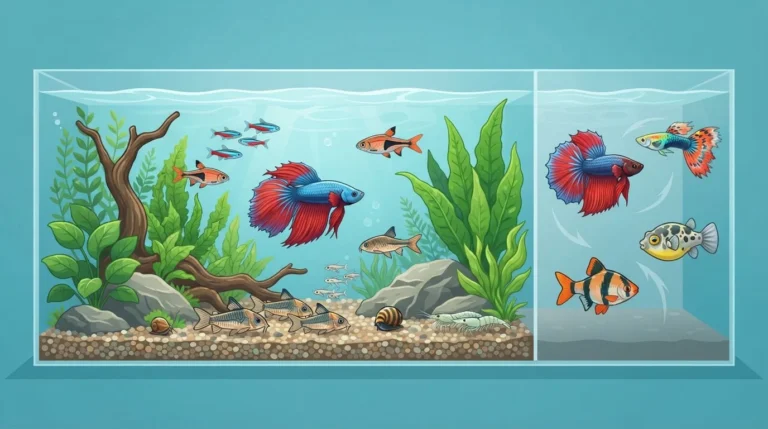
Hunting instinct explains most of what looks like aggression toward tank mates. Size, more than anything else, decides who’s at risk. Broadly, what animals bettas eat covers everything discussed throughout this whole section.
Fish in General as Prey
The broadest version of this question, fish as general prey, comes down almost entirely to size. Anything small enough becomes a target eventually.
Framed slightly differently, asking about other fish specifically returns this same size-driven answer. A betta’s instinct doesn’t distinguish much between species.
Goldfish as Potential Prey
Goldfish rarely fall victim to actual predation, mostly due to size mismatch. Asking about goldfish as prey usually leads to a different concern entirely: shared tank problems, not hunting.
Food competition tells a more relevant story here instead. Goldfish food overlap creates a nutrition mismatch in a shared tank. Neither fish’s food fully suits the other.
Goldfish Flakes and Diet Comparisons
The same logic covers processed versions too. Goldfish flakes specifically disappear just as fast in a mixed tank, reinforcing this same feeding competition concern.
Comparing diets directly settles most confusion. Betta and goldfish diets overlap only partially, meaning neither fish gets fully ideal nutrition from shared food alone.
Neon Tetras and Tetras in General
Schooling behavior offers real protection here. Neon tetras as prey rarely become a target, thanks to their small size paired with fast, group-based swimming.
More broadly, tetras as a category share this same protective schooling instinct, making them a safer size-wise choice.
Comparing Betta and Tetra Diets
Diet comparisons come up here too, just as with goldfish. Betta and tetra diets overlap somewhat, though slight nutritional differences still matter for both fish.
Guppies, Adults and Fry
Adult guppies face relatively low risk most of the time. Guppies as adults benefit from a size that’s often too large for easy predation.
Fry tell a completely different story, though. Guppy fry risk climbs sharply, since their tiny size makes them easy, appealing prey for a hungry betta.
Minnows and Smaller Species
Minnows and other comparably sized fish share this same general size-based risk profile. Minnows as prey face danger mainly when notably smaller than their betta tank mate.
A Betta’s Own Fry
Species doesn’t change this pattern much at all. A betta’s own babies as prey, or its fry more broadly, face real risk right after breeding.
Other Species’ Baby Fish
This risk extends to other species’ offspring too. Other baby fish in a shared tank face this same vulnerability, regardless of which species they belong to.
Eggs and Parenting Behavior
Eggs carry a similar risk during breeding attempts. Other fishes’ eggs sometimes get eaten opportunistically, mirroring the same pattern seen earlier with shrimp and snail eggs.
Parenting adds one more wrinkle worth understanding. Male betta parenting sometimes includes eating a few eggs while removing weak ones during normal nest care.
Bettas and Other Bettas
Aggression drives this one far more than hunger ever could. Other betta fish face real risk from each other, mostly through territorial fighting, not genuine feeding behavior.
Crabs and Crayfish
A handful of less common creatures round out this predation topic. Crabs as prey and crayfish as prey both depend heavily on relative size between the two animals.
Frogs and Tadpoles
Amphibians follow this same size-based rule too. Frogs as prey and tadpoles as prey face real risk mainly when notably smaller than their tank mate.
Scavenging on Dead Fish
Opportunism explains this final behavior well. A betta that eats a dead fish is simply scavenging available food, not showing aggression toward it.
Getting Portions and Timing Right
Even the best food choice fails if the amount or schedule is off. This section covers exactly how much and how often to feed.
How Much Food, Really
Most owners are surprised by just how little a betta actually needs. Portion size basics usually land around two to four pellets per feeding session.
Overfeeding remains the far more common mistake here. A betta that seems to eat a lot may just be an eager eater, needing no extra food.
Measuring Flake Portions
Format changes the math only slightly. Measuring flake portion sizes roughly matches two to four pellets, though flakes scatter more easily.
Daily Pellet Totals
Adding up a full day, daily pellet totals land around four to eight, usually split into two feedings.
Frequency and Rest Days
Frequency matters just as much as total amount. Feeding frequency per day works out to once or twice, echoing a betta’s natural grazing pattern.
Some owners build in an occasional rest day too. Bettas that eat every single day can still benefit from one skipped day weekly for healthy digestion.
Seasonal Shifts and Missed Meals
Seasonal shifts play a role here as well. Fish that eat less in winter are usually just responding to a metabolism slowed by cooler water.
Missing a day occasionally isn’t a crisis either. Whether a betta needs food every day or not, healthy adults handle the odd missed feeding just fine.
Feeding Young Fry
Growth changes the whole schedule considerably. Bettas that eat as young fry need several small feedings daily, far more often than any adult routine.
Feeding by Gender
Gender rarely shifts anything here. Male feeding frequency stays no different from females, both doing well with once or twice daily meals.
Portion size follows this same pattern too. Male portion needs rarely differ from females, since gender itself doesn’t change nutritional requirements much at all.
Counting Pellets Precisely
Getting specific, pellet counts per meal usually land between two and four, adjusted for the fish’s size.
Tracking a full day, total daily pellets works out to four to eight, split across two sessions.
Combining Amount and Frequency
Combining both questions, amount and frequency together comes down to one formula: small portions, twice daily.
Feeding Fry Specifically
Baby bettas need a completely different approach. Fry feeding amounts start much smaller, using food like infusoria rather than standard adult pellets.
Timing shifts considerably here too. Fry feeding frequency calls for several small meals throughout the day. Their tiny bodies can’t store energy like adults.
Mouth Shape and Feeding Position
Anatomy explains a lot of feeding behavior here. A betta’s upturned mouth is built for surface feeding habits, striking food near the top, not the bottom.
This shapes format preferences directly too. Fish that eat off the bottom less readily aren’t being picky. Their mouths simply aren’t built for it.
Sinking Pellets
Sinking food still works for some fish, though. Sinking pellets specifically can be learned successfully, though floating or slow-sinking formats generally suit betta instincts better.
The Best Time of Day
Timing ties back to their nature as well. The question of feeding time of day points toward daylight hours, since bettas are naturally most active then.
The reverse framing gets this same answer too. Asking when bettas typically eat circles back to this same daytime preference. Feeding right before lights-out is best avoided.
Feeding at Night
Darkness disrupts this natural rhythm considerably. A betta that tries to eat at night often shows less interest, built to feed by day.
Automatic Feeders and a Curious Habit
Technology adds its own small wrinkle here. Learning how feeders work for bettas takes some initial adjustment. Most fish adapt well to a properly calibrated dispenser.
One quirky habit deserves its own mention too. Bettas that spit food back out are usually just testing texture or size. This is normal, cautious behavior.
Feeding Through Every Life Stage
A betta’s needs shift somewhat across its life, though the core rules stay remarkably steady throughout.
Crowntail and Dumbo Varieties
Appearance has zero bearing on nutrition needs. Varieties like crowntail feeding needs and dumbo feeding needs all eat identically to any standard betta.
Half Moon and Koi Varieties
The same holds for other popular varieties too. Half moon feeding habits and koi variety feeding both follow this same standard, unaffected by fin or color.
Male Crowntails and Veiltails
Even combining traits changes nothing here. A male crowntail specifically follows the same guidelines as any other betta, no matter fin type or gender.
Veiltails round out this list nicely. Veiltail feeding needs match every other variety discussed so far, confirming once again that looks never affect diet.
What Bettas Seem to Enjoy Most
Personality plays a small role here, even within a fairly uniform species-wide diet overall.
General Food Preferences
Enthusiasm genuinely varies fish to fish. Exploring betta food preferences usually turns up bloodworms as an early favorite, though individual taste still differs somewhat.
Ranking gets more specific still from here. Asking about top favorite treats often narrows down to live or frozen bloodworms as the clear winner.
Broader Preference Phrasing
Broader phrasing captures this same basic idea too. Whether asked as favorite food types or preferred treat categories, the answer stays centered on protein-rich options.
Plants Rarely Make the List
Plants rarely make this preference list at all. Even asked directly, preferred plant snacks turns up a fairly empty list. Bettas show little interest in greenery.
A Few Questions Outside Betta Care Entirely
A small number of keywords don’t really relate to betta care, but still deserve an honest, direct answer.
Weather patterns explain one unusual entry here. The question of whether fish eat better after rain applies more to outdoor pond fish than indoor bettas.
An unrelated pet care question appears here too. Wondering whether cats prefer wet food is a feline nutrition question, entirely separate from betta fish care.
Human nutrition rounds out this small, unrelated group. Curiosity about feeling better after eating fish touches on omega-3s and human health, not aquarium care at all.
Bringing It All Together
A protein-rich staple, paired with the occasional live or frozen treat, covers nearly everything a betta genuinely needs. Portion control and consistency matter just as much as food quality itself.
A betta fed properly on a steady schedule is well positioned for a long life. Our betta fish lifespan guide covers this in full.
Frequently Asked Questions
The questions below cover quick, common concerns that didn’t fit neatly into the sections above.
Is it safe to mix several treat types in the same feeding?
Generally yes, in moderation. Combining a small amount of two treats occasionally adds variety without overwhelming a betta’s tiny stomach.
Should feeding stop entirely during a water change?
Not necessarily. Many owners prefer feeding either before or after the process, simply for convenience rather than safety.
Can overfeeding cause visible physical changes beyond bloating?
Yes, over time. Chronic overfeeding can affect swimming ability and body shape, not just short-term bloating after one big meal.
Does water temperature affect how much a betta wants to eat?
Yes, considerably. Cold water slows metabolism and appetite, while properly warmed water supports normal, steady feeding behavior.
Is it normal for feeding enthusiasm to vary day to day?
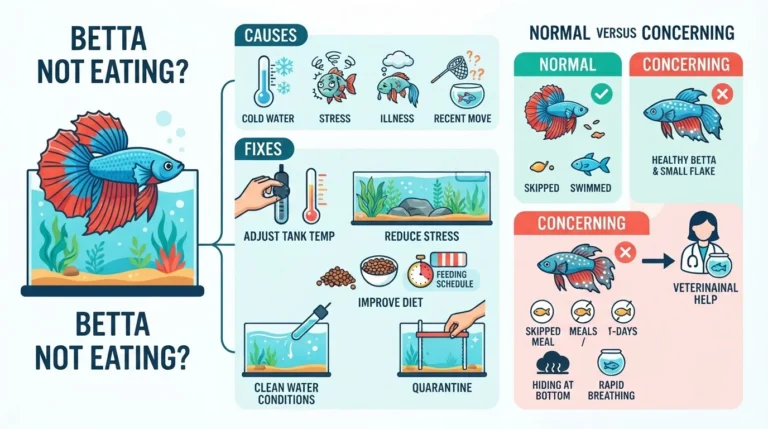
Somewhat, yes. Minor daily appetite shifts are common and rarely concerning, unlike a sustained refusal to eat over several days.
Can treats alone replace a staple pellet diet long term?
No, this isn’t recommended. Treats add welcome variety, but pellets deliver the balanced, steady nutrition a staple diet is meant to provide.
Does tank size affect how a betta approaches feeding time?
Slightly. Larger, more decorated tanks sometimes bring more active hunting during feeding. Smaller tanks tend toward quicker eating.
Should new food types get introduced gradually or all at once?
Gradually works better. Adding one new food at a time makes any digestive reaction easier to spot before adding more variety.
Can a betta’s food preferences shift as it gets older?
Yes, sometimes. Older bettas occasionally show less interest in certain treats. The core staple diet should stay steady, though.
Is it worth keeping a feeding log for a new betta?
Yes, especially early on. Tracking what and how much a new betta eats helps set a clear baseline for spotting future changes.