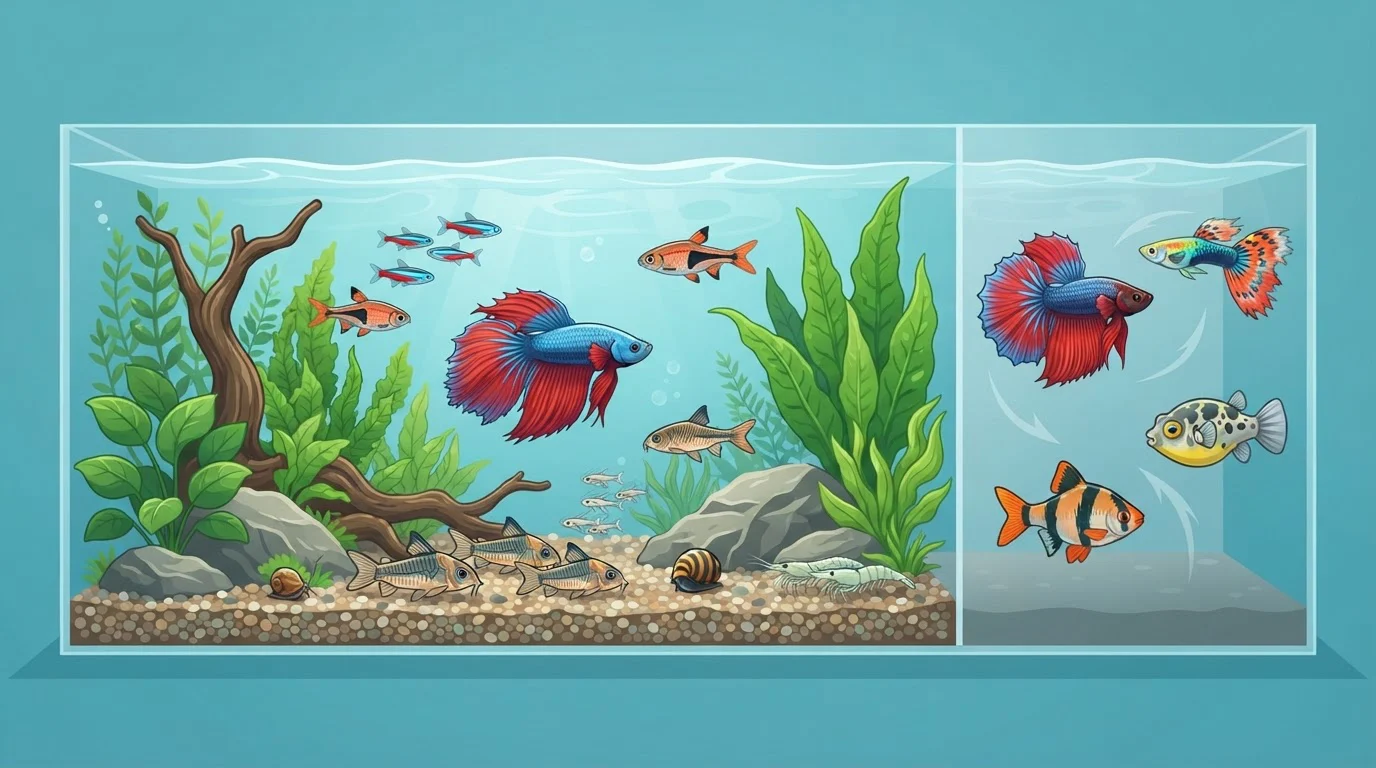
Calm, similar-sized fish and slow invertebrates make the safest betta tank mates. Fin-nippers and aggressive species almost always lead to trouble.
Peaceful Fish That Work Well
A handful of fish species pair reliably well with bettas, provided the tank gets set up thoughtfully. Size, temperament, and swimming speed decide most outcomes covered in this section.
Neon Tetras Specifically
Small size and calm group swimming explain why pairing a betta with neon tetras works out so often. A group of six or more helps them feel secure. This spreads a betta’s attention across the whole school.
This same calm pattern extends to tetras more broadly too. Ember and rummy nose varieties share this identical schooling instinct. It makes neons such a popular pick among new owners.
Tetras in a Full Tank Setup
Once a tank reaches full maturity, stocking tetras in a tank alongside a betta tends to work well. Six or more fish spread out any attention evenly.
A male betta paired with neon tetras specifically follows this same reassuring pattern. Males show no particular extra aggression toward this species compared to females. Size and schooling behavior matter more than gender here.
Otocinclus Catfish and Panda Catfish
Sticking close to the glass, rarely drawing notice from above, describes an otocinclus catfish pairing fairly well. This small algae eater spends most of its day quietly grazing.
A similar story plays out with a panda catfish choice. These small, shy bottom feeders rarely cross paths with a betta. Both stay low near the substrate most of the day.
Sucker Fish and Algae Eaters
Algae control drives most interest in a general sucker fish for algae. Larger sucker fish species turn territorial as they grow, though. Size research pays off before adding one.
Bristlenose plecos fit this peaceful role nicely, answering most concerns about an algae eater choice.
Plecos Specifically
Depending on the exact species and its full-grown size, adding a pleco to the tank works out differently. Small bristlenose types work well long term. Larger varieties often outgrow the space fast and stress a smaller setup.
Livebearers Worth Considering
Bright, active males draw more notice than plain females in almost every livebearer species kept alongside a betta. An assorted molly choice often works fine for this reason. Picking females lowers rivalry risk considerably.
The same logic applies just as directly to guppies as tank mates. A mostly female group tends to stay safer overall. Males’ bright colors and constant activity sometimes trigger unwanted attention.
Fish and Animals Worth Avoiding
Some pairings bring real risk, whether from fighting, mismatched water needs, or one fish simply hunting the other. Fin-nipping and territorial conflict explain most of the trouble covered here.
Sharks and Angelfish
Territory, not hunger, drives most conflict once a rainbow shark pairing enters a betta tank. These fish claim territory fiercely, often clashing with a betta over floor space as both grow more established.
Semi-aggressive tendencies show up often once angelfish with bettas share the same water. Angelfish sometimes nip at long, flowing fins over time. This happens more often as they mature into adults.
Goldfish in General
Cooler water and heavier bioload explain why keeping a goldfish with betta fish together rarely works long term. Goldfish simply produce far more waste than a betta tank is built to filter.
This same mismatch holds true for goldfish sharing a tank on a longer timeline too. Water quality issues tend to compound the longer both species stay together in the same system.
Black Moor Goldfish and Male Bettas
Unique coloring changes nothing about the underlying problem behind a black moor goldfish pairing specifically. The same cooler-water needs and heavy bioload apply regardless of which goldfish variety gets chosen.
Extra territorial tension sometimes shows up once a male betta with goldfish shares space. Males occasionally direct added aggression toward flowing fins and tails, treating them as a rival’s display.
Puffers and Turtles
Semi-aggressive behavior and fin-nipping tendencies make a puffer fish choice genuinely risky for most betta tanks. Species-specific research matters a lot here, since puffer temperament varies considerably across different types.
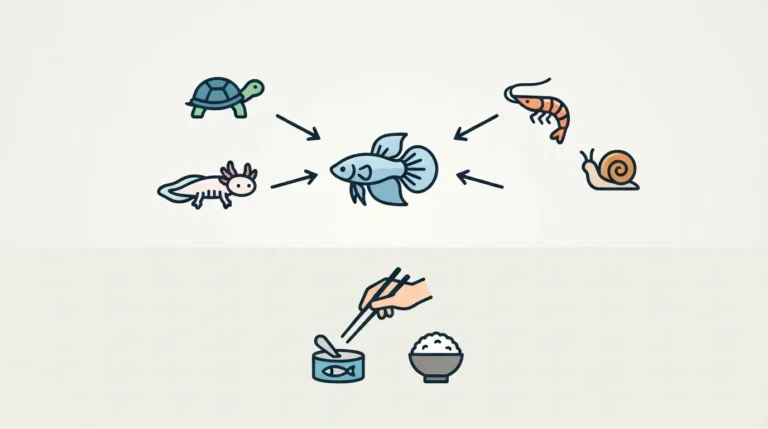
Natural hunting instinct explains why a turtle tank mate gets avoided almost every time. Turtles readily see a betta as an easy target, regardless of the turtle’s exact size or apparent gentleness.
Amphibians, Axolotls, and Snails
A few amphibians and slow-moving invertebrates come up often in betta compatibility talk. Outcomes range from genuinely safe to genuinely risky.
Frogs Specifically
Both animals staying in different tank zones explains why pairing a betta with african dwarf frogs works fine. A ten-gallon size gives each species plenty of personal room.
More broadly, a frog tank mate of most small, peaceful species tends to follow this same reassuring pattern. Temperament and size matter more here than the exact frog species chosen.
Axolotls Bring Real Risk
Risk arrives from two directions at once with an axolotl and betta pairing. Axolotls hunt by instinct, and they also need much colder water than a betta comfortably tolerates.
Checking both species’ ideal temperature ranges before shopping saves real disappointment. Water temperature mismatches trip up a surprising number of first-time community tank plans.
General Snail Compatibility
Snails move far too slowly to compete for space or food. This explains why putting a snail in the tank works so reliably well. This remains one of the safest, lowest-effort pairings around.
Regardless of exact species, housing both snail and betta together follows this same reassuring pattern almost every time. Shell strength and slow movement offer real natural protection.
Sea Snails Versus Freshwater Snails
True sea snails need salt water. This explains why a sea snail choice simply cannot share a freshwater betta tank. This particular pairing fails on a basic biological level before temperament even enters the picture.
Nerite, mystery, and ramshorn snails all make common, low-risk options once a freshwater snail pick enters the picture. These species thrive in the same water conditions a betta needs.
Choosing the Right Snail Species
Mystery snails and nerite snails top most lists whenever someone brings up which snail type works best. Both help control algae naturally, with little upkeep required.
Shrimp, Crabs, and Hermit Crabs
Invertebrates beyond snails bring a noticeably wider range of outcomes, some genuinely safe and others best avoided outright.
Plenty of hiding spots make keeping shrimp in the tank work reasonably well, whether cherry or amano types. Smaller or younger shrimp still face real risk from a hungry, opportunistic betta.
Different water needs and physically capable claws explain why a crab tank mate isn’t a great idea. Crabs sometimes hurt a betta during any dispute over territory or food.
Most species needing dry land to survive rules out a hermit crab choice entirely. A normal fish tank cannot offer the terrestrial environment these animals need.
Housing Multiple Bettas Together
Keeping more than one betta in a single tank ranks among the riskiest choices an owner makes. Territorial instinct, not tank size, drives nearly every conflict covered in this section.
Males Together, Even in a Big Tank
Fighting instinct between two males rarely gets prevented by even a spacious big tank setup. Size alone almost never stops the deep territorial drive that pushes males toward conflict.
The same caution applies to any general tank sharing among males. Space and hiding spots simply don’t override this instinct, no matter how the tank gets decorated.
Mixing Males and Females
Careful breeding aside, pairing a male and female betta stays genuinely risky most of the time. Fights break out with little warning, even inside a large, heavily planted tank.
Female Sororities
A sorority group works well once other bettas as tank mates means five or more females kept together. Close, steady watching still matters even with a properly sized group.
Territorial instinct like this runs surprisingly deep across the species. This traces back to how bettas evolved in shallow rice paddies. Each one fiercely guards a tiny patch of water from rivals.
Choosing Tank Mates by Gender
Some pairing decisions depend heavily on whether a betta happens to be male or female.
Stocking Around a Male Betta
Small rasboras, ember tetras, and neon tetras all work well once small fish choices pair with a male. Extra hiding spots help keep the peace here.
This same group of calm, small schooling species suits a male’s tank setup more broadly too. Never adding a second male stays the single most important rule.
Small Fish for Female Bettas
Mosquito fish are known fin-nippers, so a mosquito fish addition deserves genuine caution around any female betta. Calmer, schooling types make a noticeably safer pick instead.
Building a Female Community Tank
Females tend to act less territorial than males. This brightens the picture considerably once fish that suit females enters the planning stage.
The same basic rules apply once rounding out a female’s community setup. Right size, calm temper, and hiding spots matter most.
Answering the Broadest Topics
A few frequently searched topics take a wider view of compatibility instead of focusing on one single species.
The Widest Possible Framing
Plenty of calm species work well with the right planning. This answers the widest version of this topic: fish that suit bettas overall. Tetras, rasboras, and corydoras cover most of the genuinely safe options in any freshwater fish list.
Beyond Fish Entirely
Shrimp, snails, and a few frog types already covered above all fall under other animals as options. This extends the list well past fish alone. Temperature, temperament, and size all deserve a check whenever any fish sharing space joins an existing setup.
Bowls and Small Tanks Specifically
Bowls usually lack the space and filter tank mates need. This answers most concerns about what fits in a bowl setup. Shrimp or snails tend to work better than more fish once fish for small tanks comes up.
Planning a Full Community Setup
Mixing several calm species from this guide creates a genuinely solid setup. This is the core idea behind building a full community tank. Careful planning around size and temperament matters more than any single species choice.
Plants Round Out a Betta’s World
Not every compatibility topic involves animals at all. Plants play a real role in a betta’s daily environment too, sometimes overlooked next to fish and invertebrates.
Bettas often rest on top of these little algae balls without any risk. This makes a moss ball feature a genuinely low-fuss addition. Java fern, anubias, and other tough species answer most concerns about plant choices for bettas.
These options improve water quality while giving bettas safe spots to hide, adding real value beyond simple decoration.
Equipment Topics Beyond Tank Mates
A handful of topics tie back to tank gear rather than any living companion sharing the space.
Air Pumps and Heaters
A betta’s body lets it breathe air right at the surface. This explains why a tank with no air pump works fine. A pump stays nice to have, not required equipment.
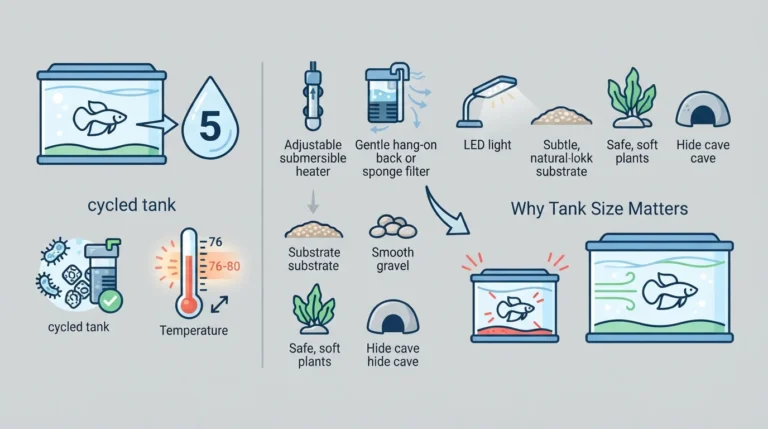
Bettas need steady warm water to stay healthy long term. A tank without a heater brings a far bigger worry by comparison.
Temperature and Copper Sensitivity
Anything added to the tank must handle that same 76 to 80°F range a betta needs. This matters whenever someone brings up what temperature works for a shared setup.
The safe amount stays quite small, since copper harms a betta even in tiny doses. This becomes a real concern once copper in the water comes up during snail or shrimp treatment.
Running Without Heat or Filter
Shaky temperature and falling water quality hit at once in a tank running without heat or filter. Both problems compound each other fast.
Filtered Tanks Versus Skipping One
Gentle picks like sponge filters spare a betta’s fins from strain. This describes a tank running a filter at its best. Far more frequent hand water changes make up for skipping one entirely.
Tank Mates Without Any Filter
Going without any filter shifts the whole equation for tank mates. The honest answer leans toward skipping tank mates entirely once fish kept without filters enters the picture. This avoids adding stress and waste for every fish sharing that water.
Bringing It All Together
Matching water needs, avoiding fin-nippers, and giving every fish enough space explain most betta tank mate success. Every topic in this guide traces back to these same basics.
Keeping a lone betta healthy for years rests on similar fundamentals. Our betta fish lifespan guide covers this in full.
Frequently Asked Questions
Do two female bettas ever live together safely?
Sometimes, in a group of five or more with a big, well-planted tank. Close watching still matters, since fights still break out occasionally.
Is it ever safe to house two male bettas together?
No, this should never happen. Male bettas fight hard if kept together, no matter the tank size or plant setup.
Do snails and shrimp compete with a betta for food?
Rarely in any real way. Snails and shrimp mostly clean up leftover food and algae, which keeps direct competition low.
What’s the safest tank mate for a beginner to try first?
Nerite snails or a small group of neon tetras both make great, low-risk starting picks. Neither needs much beyond normal betta care.
Does tank size change which tank mates make sense?
Yes, a good deal. Tanks under ten gallons do better with shrimp or snails alone. Bigger tanks open the door to more fish options.
Should new tank mates join all at once or slowly?
Slowly works better. Adding one type at a time lets an owner watch the betta’s reaction before bringing in anything else.
Does a betta’s own personality change how it handles tank mates?
Yes, quite a bit. Some bettas handle tank mates far better than others, even within species usually seen as safe choices.
Is quarantine necessary before adding a new tank mate?
Yes, ideally for a couple of weeks in a separate tank. This step catches hidden illness before it reaches the main tank.
Does adding live plants change how a betta interacts with tank mates?
Somewhat, yes. Dense planting gives every fish more retreat spots. This tends to lower overall tension in a shared tank.
Does a betta’s diet affect how it treats tank mates?
Indirectly. A well-fed, satisfied betta shows less food-driven aggression than one left hungry between meals.