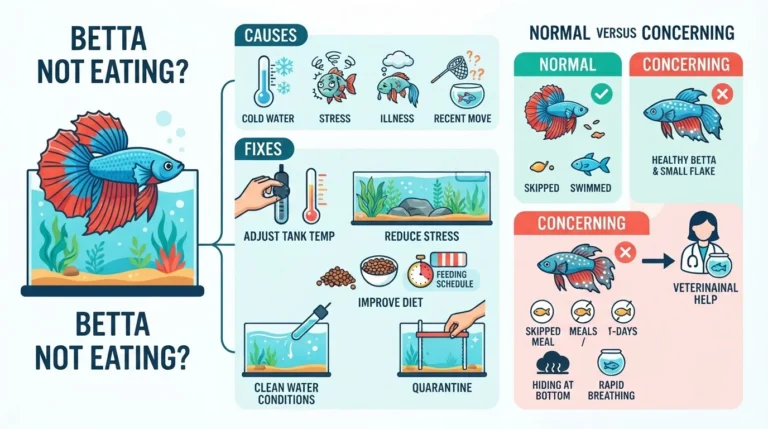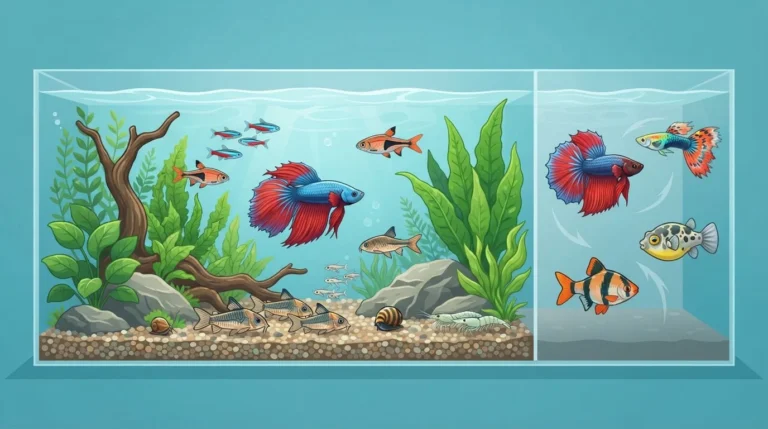
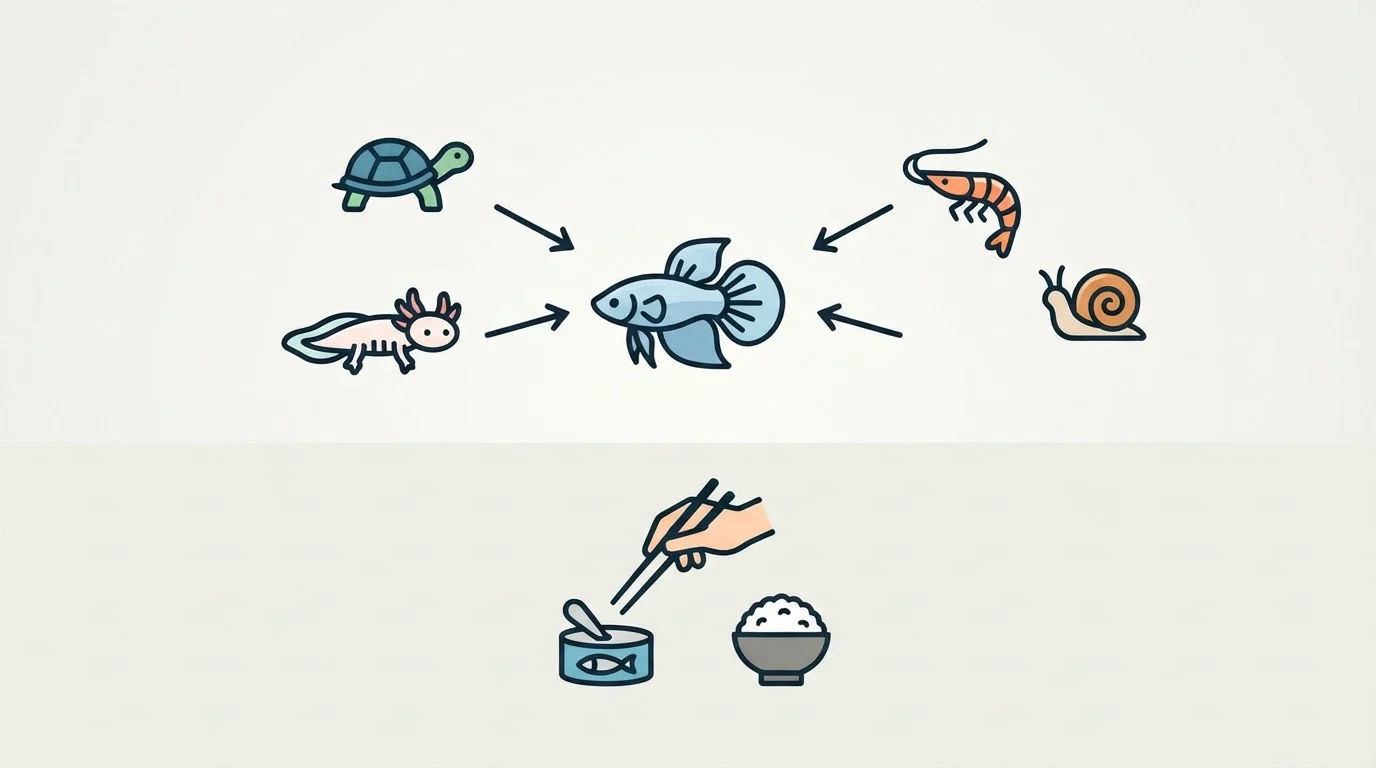
Turtles and axolotls pose real danger to betta fish, while shrimp and snails pose little threat at all.
Eating a Betta Fish Yourself
Few topics confuse new owners quite like the idea of eating a live betta. Their small size and ornamental breeding history make them impractical as food anywhere in the world. No established supply chain treats them that way.
Bettas are bred purely as ornamental pets, prized for color and fin shape rather than meat yield. This explains why people eating betta fish stays outside normal practice. Farmed food species get raised specifically for the table instead. Growth rate and flesh quality matter there, not color.
Their body size stays far too small to offer any meaningful nutrition. Their price point also sits well above what any food fish would command at a market stall.
Betta farming exists purely for the aquarium trade, spanning breeders across Thailand, Indonesia, and increasingly the United States. This entire industry structure explains why eating one stays outside normal practice. Even cultures with strong fish-farming traditions treat bettas differently. Display tanks and breeding programs define their purpose, not any dinner table.
Real Threats From Fish and Reptiles
Several tank mates and pond inhabitants threaten a betta’s safety, mostly through direct predation or size mismatch. Some of these risks come from genuine hunting instinct. Others stem purely from a size gap that widens over time.
Goldfish and Koi
Goldfish stay largely omnivorous grazers rather than active hunters. The odds of goldfish eating bettas directly stay fairly low. Their mouths lack the shape needed to strike quickly at a moving target. This pairing still fails for other reasons covered in our compatibility guide, mainly around water temperature and bioload.
Size, rather than temperament, drives most concern around koi eating bettas. Size difference alone creates risk once koi reach their adult length. Adult koi rarely show predatory behavior toward similarly sized tank mates. A young koi might coexist peacefully for months before growth changes everything.
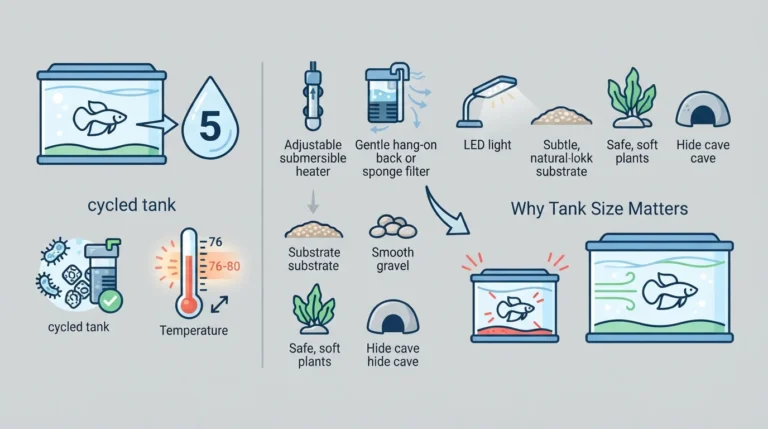
A tropical betta needs far warmer water than any koi ever will. Koi stay happiest around 65 to 75°F, well below a betta’s ideal range of 76 to 80°F. This temperature gap alone rules out most long-term koi and betta pairings, regardless of size considerations. Pond setups in particular struggle to satisfy both species at once. Matching one fish’s comfort zone usually stresses the other.
Axolotls and Crayfish
Their wide mouths and ambush-style feeding pattern explain why axolotls eating bettas happens more than most owners expect. A resting betta makes an easy target for this kind of opportunistic strike. Many first-time keepers get caught off guard by it.
Water temperature closes this door even further. Axolotls need much colder water than a betta needs, typically thriving between 60 and 68°F. This mismatch rules out this pairing on two fronts at once. Neither temperature preference nor feeding behavior lines up between the species.
Claws, more than speed, explain most concern around crayfish eating bettas in a shared tank. Their opportunistic hunting style puts even a healthy betta at real risk. Overnight, a resting fish becomes an easy target for a hungry crayfish patrolling the substrate. Molting crayfish grow bolder still, often lashing out at anything nearby while their new shell hardens.
Sharks and Red Eared Sliders
True ocean sharks never share water with a betta, in nature or in any home tank. Sharks eating bettas almost always traces back to naming, not biology. Several freshwater fish borrow the word “shark” purely for marketing.
Rainbow sharks fit squarely into this naming confusion. Territorial behavior toward bettas comes up often with this species. Chasing and fin-nipping happen whenever the two share limited floor space. Defending a claimed patch of substrate, not genuine hunting, drives most of this behavior.
A much clearer danger shows up once red eared sliders eating bettas enters the conversation. This common pet turtle readily preys on small fish, treating a betta as easy, slow-moving prey. Its care needs differ considerably from a betta’s too. A basking dock, UV lighting, and far more space become necessary. Housing these two together almost always ends badly for the smaller animal.
Plecostomus and Turtles
Algae, not live prey, makes up the diet behind any worry over high fin spotted plecostomus eating bettas. Their downturned, sucker-shaped mouths simply aren’t built for chasing a fast-moving target. This makes them a genuinely safe pairing on the predation front specifically.
Their eventual large adult size still creates indirect stress over time. A plecostomus often grows well past a foot within a few years. A tank sized correctly for a young pleco often becomes cramped once it matures. This crowding stresses every fish sharing that space.
Regardless of species chosen, the honest answer to turtles eating bettas deserves a firm warning. Even smaller, gentle-seeming turtles carry the same predatory risk that larger species do. Turtles hunt opportunistically whenever a slow target appears. Avoiding this pairing entirely stays the safest advice for almost any home setup.
Animals That Pose Little to No Risk
A few commonly feared animals pose minimal threat. Sometimes the danger runs in the opposite direction entirely. Many creatures owners worry about most turn out to be some of the safest tank mates around.
Frogs and Shrimp
Peaceful and slow-moving, mostly indifferent to tank mates, describes why african dwarf frogs eating bettas happens so rarely. Their diet centers on sinking pellets and small worms rather than live fish. Both species tend to occupy different parts of the tank anyway. Frogs stay low near the substrate while a betta patrols nearer the surface.
If anything, the risk around shrimp eating bettas runs backward from what most owners expect. A betta will readily hunt smaller shrimp given the chance, especially younger or molting ones. Ghost shrimp and cherry shrimp both fall into this low-risk category, valued more as cleanup crew than threat. Larger, established shrimp populations tend to fare better long term.
Snails Specifically
Moving too slowly to pose real danger, snails answer snails eating bettas with a firm no every time. Nerite snails, mystery snails, and ramshorn snails share this identical harmless profile. All three clean algae without ever threatening tank mates. Shell strength does matter for smaller, younger snails, though. A curious betta might occasionally nip at soft tissue before it hardens.
Household and Outdoor Predators
Beyond aquatic animals, a couple of everyday risks deserve planning around. Both involve creatures already living in or near most homes. This makes them easy to overlook until an accident happens.
Cats and Storks
An open or uncovered tank turns cats eating bettas into a genuine, if often overlooked, risk. Cats hunt by instinct, regardless of how well-fed they stay. A paw dipped into shallow water, followed by a quick scoop, happens faster than most owners expect. A secure, well-fitting lid closes off the one opening a curious cat would otherwise use.
Unprotected outdoor ponds bring their own version of this risk. Storks eating bettas becomes a real concern once fish sit exposed. Herons and similar wading birds share this same hunting pattern, striking quickly with long beaks. This risk stays irrelevant for typical indoor setups, mattering only to owners running an outdoor pond or fountain.
Feeding Competition Rather Than Predation
A few related keywords have nothing to do with predation at all. They cover other animals eating a betta’s food supply instead, a much less dangerous but still worth-knowing concern.
Goldfish and Tadpoles Eating Food
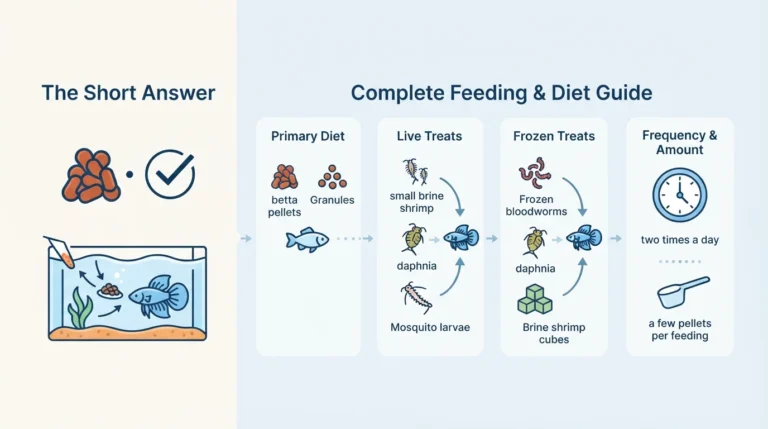
A shared tank makes goldfish eating betta food almost inevitable. Goldfish eat nearly anything placed in the water. They often beat a slower betta to floating pellets entirely. Each species needs its own appropriate nutrition. Goldfish food lacks the protein a betta needs, and betta food lacks what goldfish do best on.
This same opportunistic pattern shows up with tadpoles eating betta food too, unrelated to any genuine predation risk. Tadpoles graze almost constantly as they grow. Betta pellets offer an easy, protein-rich meal they snatch up whenever available. Offering separate food for each species, timed differently through the day, addresses this overlap easily.
Tiger Barbs and Turtles Eating Food
Fin-nipping, not food, remains the bigger worry once tiger barbs eating betta food enters the picture. Tiger barbs actively target long, flowing fins regardless of food competition. This makes them a poor tank mate choice on multiple fronts.
Both concerns arrive together the moment turtles eating betta food enters the picture. Turtles readily eat pellets meant for a betta, adding food competition on top of the predation risk. Between the two issues, the real danger stays firmly on the predation side.
Bringing It All Together
The genuine predators covered here, turtles, axolotls, and crayfish among them, share a common thread. They either actively hunt smaller animals or carry the physical means to injure a betta directly. Animals wrongly assumed dangerous, like shrimp and snails, pose little risk at all in most home setups.
Our betta tank mates guide covers broader compatibility beyond predation risk alone, including water needs and temperament matching.
Frequently Asked Questions
Is predation risk the same thing as general compatibility?
No, these stay separate concerns entirely. An animal poses zero predation risk while still making a poor tank mate, for reasons like mismatched temperature.
Should outdoor betta setups always include netting or covers?
Yes, worth doing in most cases. This protects against birds and other predators, especially in regions where herons visit often.
Does a secure tank lid prevent most household pet risks?
Yes, in most cases. A well-fitting lid combined with thoughtful tank placement addresses the vast majority of household pet concerns effectively.
Do juvenile predators pose less risk than fully grown adults?
Usually yes. Smaller, younger predators often lack the size needed to overpower a betta the way an adult eventually would.
Is it ever safe to keep a betta with any turtle species?
Rarely recommended, even with smaller species. Differing care needs and consistent predation risk make this pairing difficult to justify.
Does researching a specific species resolve most predator confusion?
Yes, considerably. Looking up the actual species behind a common name clarifies most naming confusion, especially around freshwater “sharks”.
Do two genuinely safe animals ever fight over territory?
Yes, occasionally. Predation-safe species like snails or shrimp sometimes trigger mild nipping from a particularly aggressive betta.
Does tank size change how much predator risk matters?
Somewhat. Larger tanks give a betta more room to avoid a threat. Genuinely dangerous species still pose real risk regardless of space.
Is captive-bred wildlife safer than wild-caught animals as tank mates?
Often yes, since captive-bred animals tend to stay calmer and better adjusted to tank life. Species-level risk still applies regardless of origin.