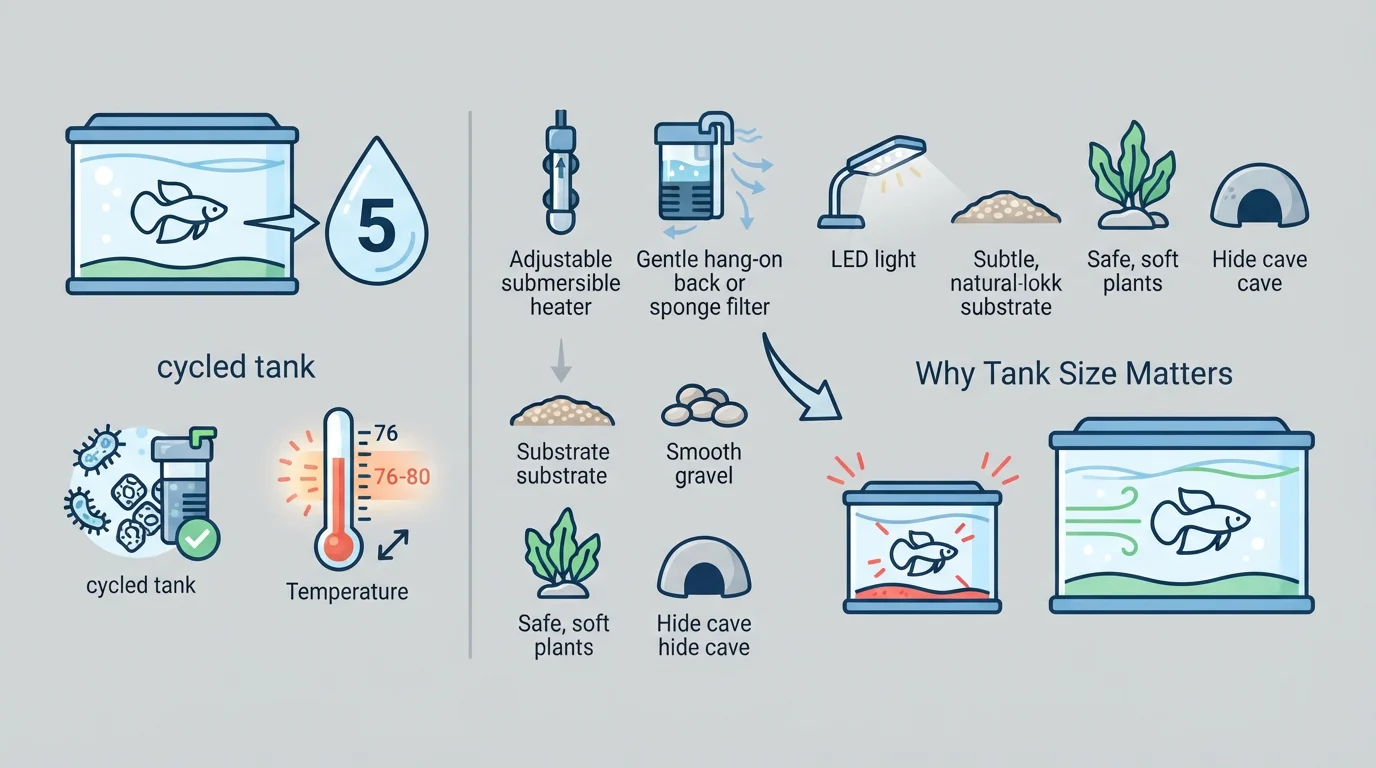
A cycled five-gallon tank, kept at 76 to 80°F, gives a betta its best shot at life.
Why Tank Size Actually Matters
Tank size questions come up more than almost any other topic in betta care. Before running through specific sizes, it helps to know why size matters at all.
Waste, leftover food, and breathing all shift the balance of a tank’s water chemistry. Smaller volumes concentrate these changes fast, while larger ones dilute them and buy more time between problems.
This single fact explains almost every size-related answer in this guide. Keep it in mind as the numbers below start feeling repetitive.
The Smallest Tank Sizes
Several tiny tank sizes come up constantly in owner questions, and most share the same basic verdict.
Half Gallon and One Gallon
Water quality drops fast in a half gallon betta tank. A heater rarely fits comfortably at this size either. This falls well below any real minimum.
Whether listed as “1 gallon” tank size or spelled out, a one-gallon setup sits in the same boat. Heavy, frequent upkeep becomes the price of staying this small.
1.5 and 2 Gallon Tanks
Things edge only a bit closer to workable at 1.5 gallons total. Survival becomes possible with very frequent water changes, though this still falls short of ideal.
A small heater helps somewhat once you reach a 2 gallon tank size. Fitting a filter well remains genuinely tough here.
When Small Starts Turning Workable
Somewhere between two and three gallons, the picture genuinely starts to improve.
2.5 and 3 Gallon Tanks
Room for a small heater and filter opens up at 2.5 gallon tanks and a 3 gallon setup. Both sit closer to workable than anything smaller.
Even so, these sizes still call for more frequent water changes than most owners want to do. Five gallons remains the size most keepers point to as the real, practical floor.
3.5 and 5 Gallon Tanks
Opinions genuinely split at the size just below that, though. A 3.5 gallon tank choice sits right on the edge of debate among long-time keepers. Some call it fine; others want more room.
Widely seen as the real floor for easy care, a five gallon setup ends most of this debate. Experienced keepers tend to stop second-guessing once they reach this benchmark.
Moving Into Mid-Size and Larger Tanks
Stability gets much easier once a tank grows past the ten-gallon mark.
10 Gallon and Combined 10/20 Tanks
Plenty of room for tank mates comes with a 10 gallon betta tank. Small mistakes matter far less here too. This size handles slip-ups gracefully.
Sizing choices grow from here too. Community planning opens right up once you’re weighing a 10 or 20 gallon tank against smaller alternatives.
20 and 30 Gallon Tanks
Bigger community plans deserve even more room still. A 20 gallon betta tank or a 30 gallon setup gives far more space than smaller sizes allow. Sudden shifts in heat matter less here too.
This makes bigger tanks a genuinely forgiving choice for less experienced owners still learning the ropes.
Housing Two Bettas Together
Gender settles this particular question more than tank size ever could.
No matter how big the tank, males should never share space. This holds true whether it’s two bettas in ten gallons or packed into a smaller five-gallon shared tank.
Females tell a somewhat different story here. With careful, steady watching, two females sharing the larger tank size might work out reasonably well.
Territorial instinct like this runs surprisingly deep in the species, by the way. It traces straight back to how bettas evolved in shallow rice paddies. They fiercely guard tiny patches of water from rivals.
Understanding this background helps explain why size alone never fully solves the fighting problem between two males.
The Truth About Bowls
Bettas get sold and displayed in bowls constantly. This explains why this single topic generates so many questions.
Survival and thriving are two very different things worth separating clearly. Yes, thanks to one special body part, answers can a betta survive in a bowl. It rarely makes a great long-term home, though.
Stripping away every detail changes nothing here either. Missing gear stays the real issue, no matter how plainly someone asks about just a plain bowl.
Here’s a bit of background that explains this whole pattern. Bettas evolved a labyrinth organ, letting them gulp air at the surface. This helped them survive shallow, stagnant puddles back in Southeast Asia.
Pet stores lean on this exact adaptation to justify keeping bettas in cups and bowls for display. It’s a genuine survival trick, not evidence that bowls make good permanent homes.
Small and Large Bowls Compared
Water volume makes a real difference between these two options. Faster ammonia buildup between changes is the sharpest bowl problem. It hits hardest in a small bowl setup.
More water buys a little more time, though not much. Somewhat better off, though still short on real gear, describes a large bowl choice fairly well.
Material and Naming Don’t Change Much
Glass versus plastic changes almost nothing about the core issue. The same problems as any other bowl type show up in a glass bowl option.
Naming changes even less here. Gaining nothing from its label, a goldfish bowl choice works no better for a betta than a goldfish.
A One-Gallon Bowl Specifically
Two problems stack together in this particular case. Combining a too-small space with the usual bowl gear gaps makes a one gallon bowl genuinely risky.
Bowls With a Lid or Bamboo
Safety and water quality remain two separate concerns, even with upgrades added. Jumping risk gets solved by a bowl with a lid. The missing filter and heat problem stays completely untouched, though.
Plants help just a little more than a lid does. A small water quality lift comes from live greenery in a bowl with bamboo. This remains a minor fix, at best.
Bowls With a Plant or Without a Filter
This same small boost applies more broadly too. A bowl with a live plant helps a little, though proper filtering still matters far more here.
Skipping filters entirely reveals the real problem clearly. Faster ammonia and waste buildup happens in a bowl without a filter than in any properly equipped setup.
The Mechanics Behind Bowl Survival
Two closely related questions deserve one combined answer here. Both how bettas survive and why this survival happens trace back to that same labyrinth organ discussed earlier.
Jars, Vases, Bottles, and Other Small Containers
Beyond bowls specifically, several other small containers come up just as often in owner questions.
Jars in Every Form
Simple doesn’t mean it’s enough here. Falling short on every real need happens in a mason jar option, just like bottles and cups.
The same holds for jars more broadly too. Sold sometimes as basic housing, a general jar choice shares this identical gap in gear.
Vases, Plain and With Plants
Decor brings the same old problem back around. Lacking any real filter or heat power describes a plain vase setup used mostly for display.
Plants add a new wrinkle to this particular question. Rotting roots can hurt water quality over time. A plant vase choice paired with a peace lily gets discouraged for this reason.
Bottles, Regular and Wine
Novelty setups fail for the usual reasons every time. No filter, no heat, and too little swimming room describes a betta in a bottle, however neat.
Style never fixes function either. Sometimes tried as a creative idea, a wine bottle setup shares this exact problem. Looks never add real gear.
Cups and Their Chinese Variant
Permanent housing was never the intended purpose behind these containers. A store display cup works fine for a day or two, nothing more than that.
Imported variations change nothing about this rule. Small size doesn’t shift the short-term purpose, whether it’s called a chinese store cup or something similar.
Closed and Plastic Containers
Sealed containers bring a different worry entirely. Blocking the air access a betta’s labyrinth organ needs poses real risk in any fully closed container.
Material itself rarely causes the actual trouble here. Fine on this front, though still missing a filter and heat, sums up most plastic container setups.
Tank Material and General Size Category
A few questions relate to tank material or broad size category rather than an exact gallon count.
Plastic Tanks and Glofish Tanks
Plastic doesn’t hold a betta back at all, contrary to what some assume. Working just fine describes a plastic betta tank. Material matters far less than proper size, filtering, and heat.
Fancy lighting changes nothing basic either. Known for its special glow, a glofish tank option follows the exact same rules as any setup.
Small Tanks in General
Exact size and included gear both count more than the label here. A careful answer, based on both factors, comes with any question about a small betta tank in general.
There’s a real floor to this question worth repeating. That same five-gallon floor mentioned earlier gets pointed to whenever someone asks how small can it go.
Big Tanks
More room tends to help, not hurt, in most cases too. A good answer awaits anyone considering a big betta tank, so long as plants fill the space.
Filtration Equipment
Filters play a direct role in almost every other part of this guide, whether mentioned explicitly or not.
Gentle choices work best for delicate fins here. Sponge filters paired with a filtered tank setup spare a betta’s fins while doing a great job.
A related version of this question narrows in on gallon size specifically. Fitting proper filtration by tank size matters more as the gallon count shrinks. Smaller volumes leave less room for gear.
Going without a filter simply takes more work instead. Far more frequent hand water changes make up for skipping one. A tank without a filter remains doable in a pinch.
Where the Water Comes From
Water source worries new owners more than it probably should, so long as basic treatment happens first.
Tap Water, Plain and Filtered
Treatment really is the only must-do step here. Chlorine is the only real worry once tap water for bettas gets properly treated with a basic conditioner.
Pairing both steps works exactly as planned. Two water quality worries get solved at once when tap water with filtering run side by side.
Bottled and Purified Water
Distilled types need one extra step worth knowing. Missing minerals a betta’s body needs is the one catch with bottled water choices, especially distilled varieties specifically.
Method matters more than the label here too. A similar mineral question comes up with purified water options, based on how the water was actually produced.
Well Water and the Ideal Type Overall
Change is the real story with wells, more than anything else. Mineral levels and pH swing from well to well. This is why well water for bettas calls for testing first.
One simple answer covers most of this ground. Clean, treated water in a fair pH range is what the ideal water type really comes down to.
Temperature and Room Conditions
Heat affects betta health more directly than almost any other single factor covered in this guide. For a full look at how heat shapes long-term health, see our betta fish lifespan guide.
Ideal Temperature and Cold Water
Staying steady matters as much as the actual number itself. A clear range of 76 to 80°F, kept steady, answers what temperature is ideal for most bettas.
Falling short brings real trouble fast, unfortunately. A slower body and weak immune system are what a betta kept in cold water ends up facing.
Cold Rooms and Dark Rooms
Room heat rarely does the job entirely on its own, by the way. A real heater usually beats relying on ambient room warmth alone in any cold room setup.
Light brings a whole separate worry too, distinct from temperature. Throwing off a betta’s natural day and night pattern is a real risk in any dark room setup.
Outdoor Housing
A few questions cover settings well outside the usual indoor tank entirely.
Climate decides most of what happens here, more than anything else. Steady warm spots work fine, but nights turning cold spell trouble fast for an outdoor fountain setup.
Predators bring their own worry to ponds specifically. Birds and other animals passing by add real danger to any pond setup for bettas.
Lakes go a step too far entirely, worth stating plainly. Both fish and local wildlife face real risk from any lake release scenario. This isn’t recommended at all.
Community Tanks and Other Fish
Overall tank setup, not just one single species pairing, drives a few of the questions in this section. For a full look at which fish work well, see our betta tank mates guide.
Community Aquariums and Tanks
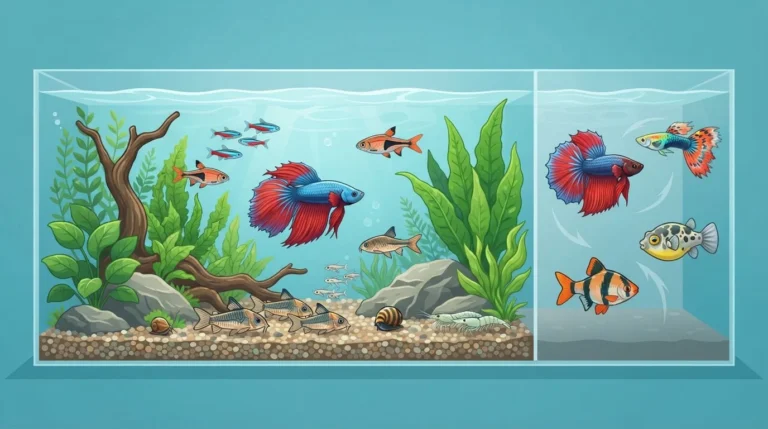
Planning makes the biggest difference here, above all else. Calm species, good size, and enough hiding spots tend to make a community aquarium setup work out well.
Wording changes nothing about the actual answer. This same solid pattern holds true for a community tank option, no matter how the question gets phrased.
Tank With Goldfish or Other Fish
Heat and mess make this particular pairing tough. Worth steering clear of despite its popularity, a tank with goldfish brings clashes other tank mates avoid.
Every other pairing still needs its own individual check. Heat, temperament, and size all deserve a look before any tank with other fish joins an existing setup.
Other Species and Betta Bowls
The same rules apply no matter the species involved here. Size and temperament matter most when weighing whether other species can join a betta’s existing tank.
Bowls limit the options quite a lot here, though. Very few tank mates truly work given the usual gear gaps in a bowl with other fish.
Fish That Can Live in a Betta Tank
Options open up nicely with the right gear in place. Peaceful, right-sized species come to mind when asking what fish work best overall in a shared setup.
Plants and a Few Final Setup Questions
A few last questions round out the bigger picture of good betta tank setup overall.
Live Plants and Water Volume
Water quality gets a real boost from greenery here. Natural hiding spots near the tank’s structure come along with any live plant addition, earning a strong yes.
Volume ties right back to earlier ground covered above. That same five-gallon floor from the sizing section is what how much water is needed circles back to.
Stocking a Five-Gallon Tank
Invertebrates make more sense at this particular size, worth noting. Shrimp or snails tend to work better than more fish when stocking a 5 gallon tank.
Fish specifically suited to this size get asked about often too. Betta friendly fish choices for a five-gallon setup overlap with calm species from our compatibility guide.
Fish That Suit a Bowl
Bowls specifically raise this same question from a different angle. Wondering what fish suit a bowl setup gets a short answer: very few, given typical bowl equipment gaps.
Bringing It All Together
Right size, good filtering, steady heat, clean water: every question here traces back to these same basics. Bowls, cups, and small containers fall short on several fronts at once, no matter their shape or material.
Every box gets checked well by a properly set up tank of five gallons or more. No matter which size, container, or water type brought you here, that same basic test still applies.
Frequently Asked Questions
The questions below cover quick, common worries that didn’t fit neatly into the sections above.
What’s the single best upgrade from a bowl or small container?
Nearly every problem in this guide gets fixed by moving to a filtered, heated five-gallon tank. This one change brings the biggest overall gain.
Does tank shape matter as much as tank volume?
Less so. Wider, shorter tanks give a betta more surface area to reach air compared to tall, narrow shapes.
Can a betta adjust to tap water without a conditioner over time?
No, this isn’t safe to try. Chlorine stays harmful no matter how slowly a fish gets used to untreated water.
Is it worth testing water even in a well-filtered tank?
Yes, now and then. Filters cut down on problems a lot, but the odd water check still holds real value.
Should room temperature alone ever replace a real heater?
Rarely works well long term. Even a room that feels warm often swings more than a betta’s tight comfort range allows.
Can moving a betta between containers cause stress?
Yes, especially with heat or pH shifts between the two. A slow, careful move keeps this risk low during any transfer.
Does how often you change water depend on tank size?
Yes. Smaller tanks need water changes more often than bigger ones. Less water means quality shifts happen much faster.
Is a lid always needed no matter the container?
Basically yes, since bettas are known jumpers no matter the setup. A tight, secure lid stops this common, often deadly accident.
Can outdoor housing ever work safely all year round?
Only in steady warm climates without big seasonal swings. Even then, birds and water checks stay ongoing concerns.
Does adding a heater change how often water changes are needed?
Not directly, though steady heat does support more steady tank health overall. Filtering and stocking level matter more for that.
Can a betta tank be too big for just one fish?
Not really. A very large tank does best with more plants and decor. This helps the fish feel calm, not exposed.
Is glass or acrylic the better pick for a betta tank?
Both work well. Glass resists scratches better, while acrylic is lighter and tougher against impact.
Does the type of substrate affect water quality much?
Somewhat. Fine gravel or sand cleans up easier than big rocks. Rocks can trap waste and hurt water quality.
Does tank placement near a window cause extra problems?
Yes. Direct sun can spark heavy algae growth even in a well-kept tank. Keeping it away from windows helps.
Is it necessary to match tank decor to a betta’s look?
Not at all. Decor is purely a style choice. It carries no real link to health, no matter the fin type.