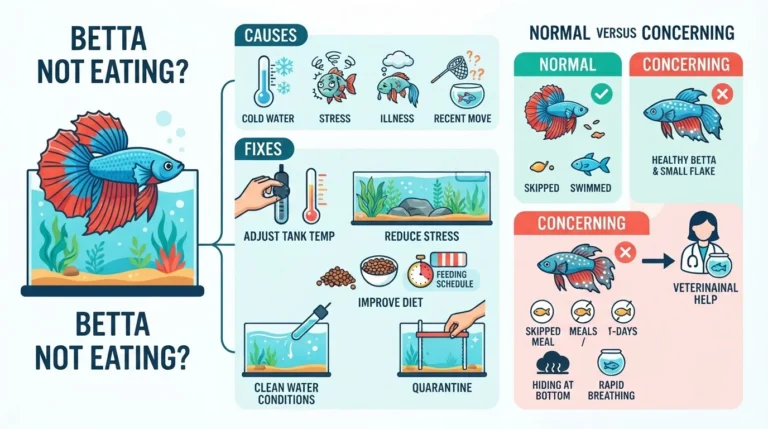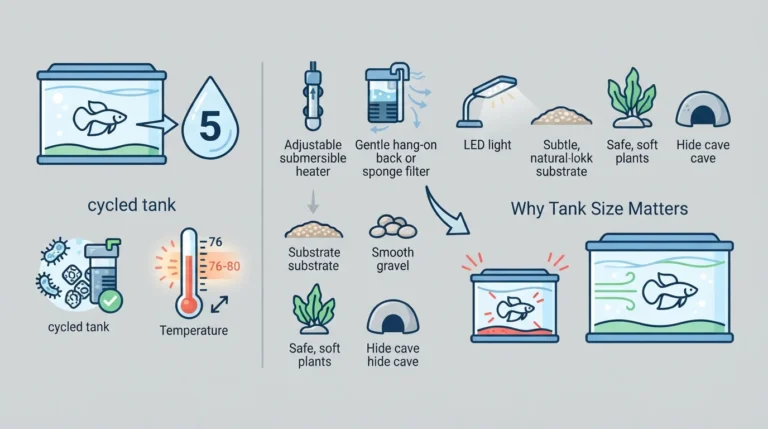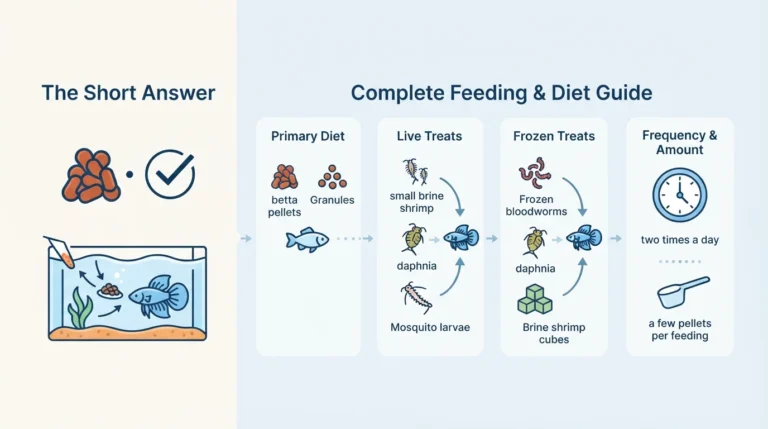
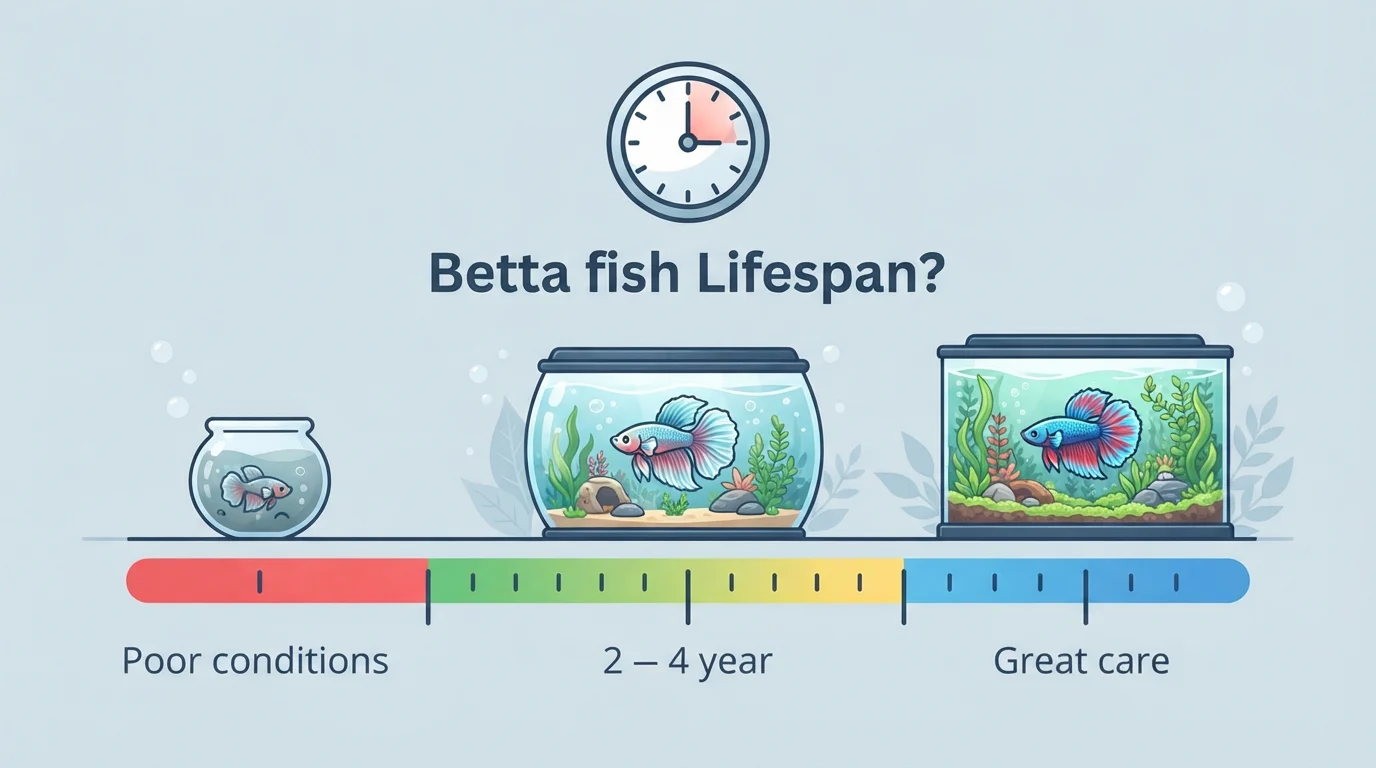
Most betta fish live two to four years with good care. Poor conditions can cut this short, while great care can push it closer to five.
The Short Answer First
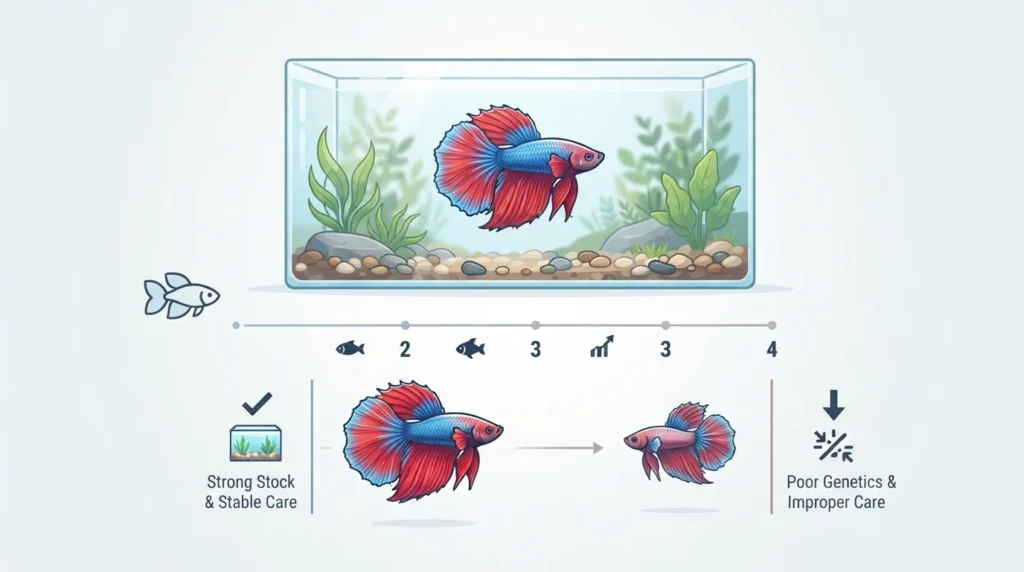
New owners usually want one clear number before anything else. So here it is: average betta lifespan sits between two and four years for most healthy pet fish.
Genetics and daily care both shift this number up or down. Strong stock, paired with stable conditions, tends to push a fish toward the longer end of that range.
Some people go further and ask about living ten years. Sadly, this isn’t realistic for the species, even with flawless care from day one.
Ten years simply exceeds what a betta’s body can handle naturally. No amount of good care changes this basic biological limit.
Fasting: How Long Without Food
Feeding, or skipping it, plays a direct role in shaping a betta’s health over time.
General Fasting Limits
Healthy adults asking about surviving without food get a fairly reassuring answer. Most can go one to two weeks, relying on stored energy reserves.
Pushing past two weeks isn’t wise, though. Real risk of muscle loss and a weakened immune system starts creeping in past that point.
Owners sometimes phrase this question differently too. Going without eating entirely, in the broadest sense, falls under this same one-to-two-week window.
Short, Specific Fasts
Planning a short trip often brings up fasting five days. Thankfully, this causes no real harm to a healthy adult betta.
Stretching things to fasting a full week sits closer to the safe upper limit. It still works fine for most healthy adults in decent shape.
Counting the Exact Days
Some owners want an exact number rather than a range. Unfortunately, asking how many days is safe without food doesn’t have one fixed answer.
Longer trips call for something else entirely. An auto-feeder beats pushing a fish past this window. Full feeding schedules live in our betta feeding and diet guide.
Health and age shift this number considerably. A strong, well-fed adult simply handles a longer fast better than a weak or young one would.
Fry Cannot Fast Like Adults
Baby bettas face a completely different rule here. Questions about fry going without food get a much stricter answer than adult questions do.
Frequent feeding, many times a day, is non-negotiable for fry. Even one skipped full day can set back their growth in ways that stick around.
Wild Life Versus Captivity
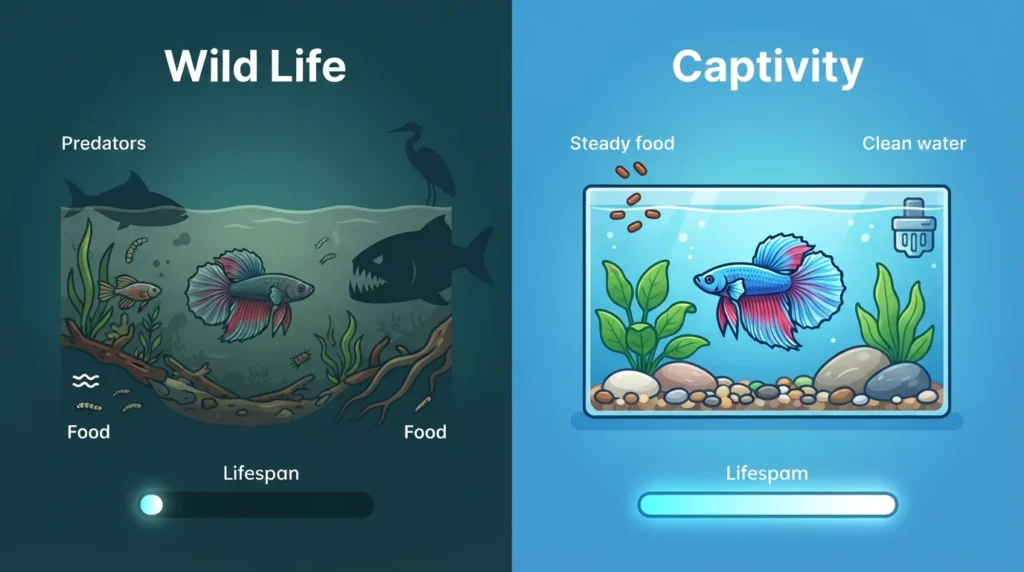
Where a betta lives changes its outlook more than almost anything else.
Reaching that full two-to-four-year range mentioned earlier is typical for fish kept in captivity today. Steady food, clean water, and no predators all work in their favor.
Out in the wild, by contrast, survival usually caps out around two years. Predators, unstable water, and shifting seasons all take a toll there.
This gap isn’t random at all. It simply reflects how different the daily risks are between a controlled tank and an open, unpredictable habitat.
Water Quality Problems That Cut Life Short
Bad water ranks among the fastest ways to shorten a betta’s life, sometimes within just days.
Dirty and Cloudy Water
Health can decline within days to a couple of weeks for fish kept in dirty water conditions. Ammonia and bacteria build up fast in neglected tanks.
Cloudy water tanks raise a closely related concern too. This often points to the same underlying cause: ammonia spikes or a sudden bacterial bloom.
Weekly water changes prevent both problems from developing in the first place. Testing water regularly catches issues before they even become visible.
Cyanobacteria and Algae Blooms
Blue-green algae blooms bring their own distinct risk to a tank. This type of algae releases toxins and eats up oxygen as it spreads.
Less light and fewer extra nutrients usually clear this problem up fast. New tanks sometimes turn cloudy for a few weeks while cycling, which differs from this ongoing issue entirely.
Cold Water and Its Toll
Slower metabolism and a weaker immune system both come with consistently cold water. This raises illness risk and can shorten life considerably over time.
Steady warmth keeps a betta’s whole system working the way it should. A reliable heater fixes this problem almost entirely on its own.
Water Source Matters Less Than You’d Think
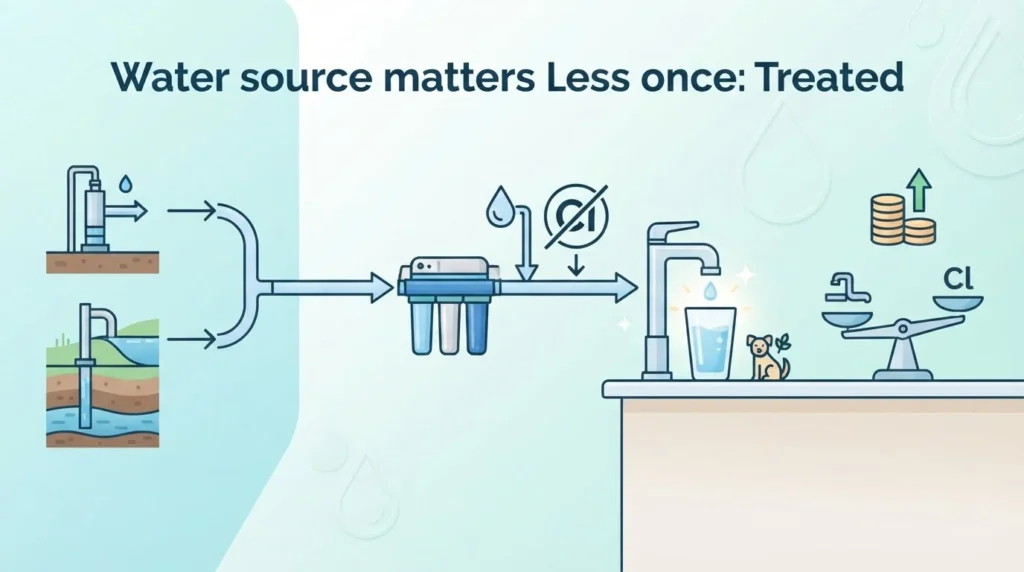
Where the water comes from worries new owners more than it probably should, once basic treatment happens.
Treated tap water works just fine, once a basic conditioner removes chlorine from it. This remains the most common, affordable water source for most owners.
Untreated tap water is really the only genuine concern here. Chlorine and chloramine inside it can harm a fish directly if left untreated.
Bowls, Cups, Bags, and Other Small Containers
Bettas get sold and displayed in tiny containers so often that this topic raises constant questions.
The General Bowl Question
Survival becomes possible in a bowl setup thanks to a special organ that lets a betta breathe air. Thriving, though, is a different story entirely.
Heating and filtering both typically go missing from a bowl setup. Missing gear stays the real issue, no matter how the bowl question gets asked.
Small Bowls Specifically
This same core problem shows up even sharper in a small bowl setup. Less water means faster ammonia buildup between any changes made.
Bowls Without Enough Oxygen
That same special breathing organ mentioned earlier is what makes bowls without enough oxygen survivable at all. This helps in a pinch but isn’t a long-term solution.
Fishbowls by Another Name
The rounded design changes nothing about missing heat or filtration in a classic round fishbowl. It shares this exact same problem as any other bowl shape.
Cups and Transport Bags
Permanent housing was never the goal behind a store display cup. It works fine for a day or two, nothing more.
This same short-term rule applies to a betta transport bag too. Several hours is fine; anything longer risks temperature swings and real stress.
Air, Oxygen, and Time Outside Water
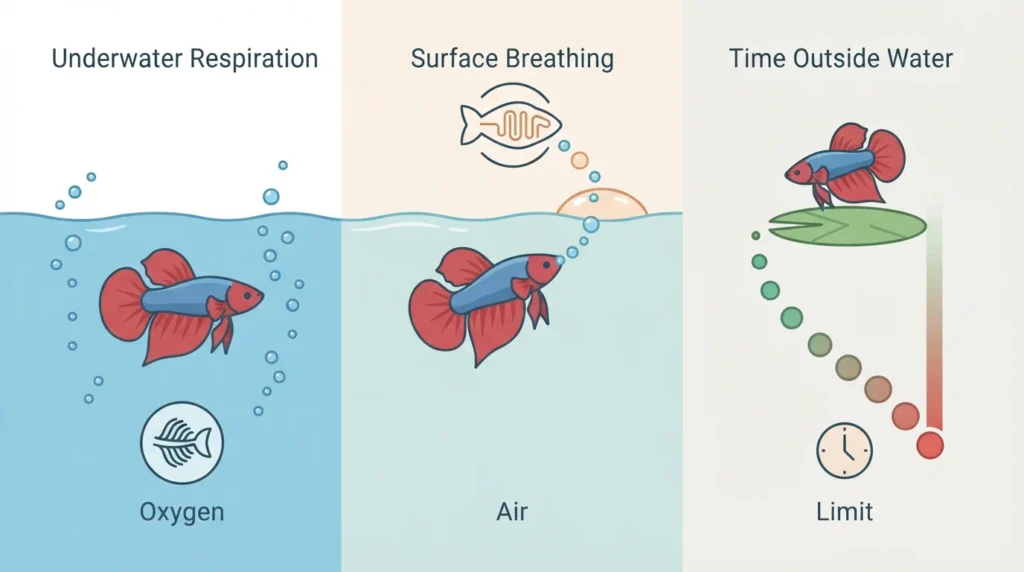
A betta’s relationship with air raises a few specific, worth-knowing questions.
Outside the Tank Entirely
Only a few minutes at most is how long survival lasts out of the water. A secure, well-fitting lid prevents most accidental jumps before they even happen.
Low Water or No Water
A tank running low on water, rather than a fish fully removed from it, brings a related risk. A crack or fast evaporation can cause this quietly over time.
Oxygen Levels in the Tank
Full air exposure is one thing, but living with too little oxygen in the water matters separately. Gentle water movement and a slightly gapped lid both help keep levels steady.
Skipping Key Equipment
A couple of pieces of gear matter more than almost anything else for long-term health.
Room temperature becomes the only factor at play for a tank running without a heater. This rarely stays steady enough across an entire year on its own.
Ammonia builds up faster between water changes for a tank running without a filter. A simple sponge filter fixes most of this problem affordably.
Every essential setup gets covered in our betta tank setup guide.
Illness and Its Effect on Lifespan
Several specific health problems can shorten a betta’s life if they go untreated. Full symptoms and treatment steps for each condition live in our betta disease and health guide.
Serious, Fast-Moving Conditions
Most betta fish live with dropsy for only a few days to about two weeks. This condition brings a genuinely tough outlook once symptoms appear.
Quick treatment matters enormously with an ich outbreak, a fast-spreading parasite. Most affected fish still recover strongly if caught early.
Tumors and Fin Rot
Outcomes vary widely with a tumor, depending heavily on where it grows and how quickly it spreads. Location matters just as much as growth speed here.
Catching it early makes all the difference with fin rot, by contrast. Mild cases barely shorten life at all with prompt treatment.
Does Gender Change the Numbers?
Males and females share roughly the same lifespan range, though a few small differences are worth knowing.
Basically the same two-to-four-year answer covers both a female betta lives question and a male betta specifically one. Gender just isn’t a major factor.
Males do tend toward more territorial behavior, though. This can indirectly affect lifespan through fighting, so safe pairing tips live in our betta tank mates guide.
Bringing It All Together
Clean water, steady heat, good food, and a proper tank: these all trace back to the same basics. Small containers and neglected water consistently fall short on multiple fronts at once.
Every box gets checked reliably by a well-set-up tank. No matter which specific question brought you here, that same basic test still applies.
Frequently Asked Questions
The questions below cover quick, common concerns that didn’t fit neatly into the sections above.
Can a betta fish really live ten years?
No, this goes past what the species can naturally handle. Five years sits closer to the realistic upper limit for most owners.
Is tap water actually safe for a betta fish?
Yes, once treated with a basic water conditioner. Untreated tap water’s chlorine is really the only genuine risk here.
Do bowls ever work well long term for a betta?
Rarely, since they typically lack both filtering and heat. A proper small tank almost always performs far better.
How long can a betta survive without a heater?
It depends heavily on how steady the room stays. Warm, stable rooms carry far less risk than rooms with big swings.
Does gender really change how a betta should be housed?
A bit, mostly around aggression, not lifespan itself. Males need more careful tank mate planning than females typically do.
What’s the single biggest factor in a longer betta life?
Steady water quality and steady heat likely matter more than anything else. Getting these two things right fixes most other risks in this guide.
Is a five-gallon tank really needed for good health?
It’s the real floor most experienced keepers suggest. Smaller setups are technically possible but demand far more upkeep effort.
Should tank decor change as a betta gets older?
Not really, though older or less active fish sometimes like easier access to resting spots near the surface.
Is it worth keeping a simple daily log of a betta’s habits?
Yes, especially for new owners still learning what’s normal. A quick daily note makes it far easier to spot small changes early.